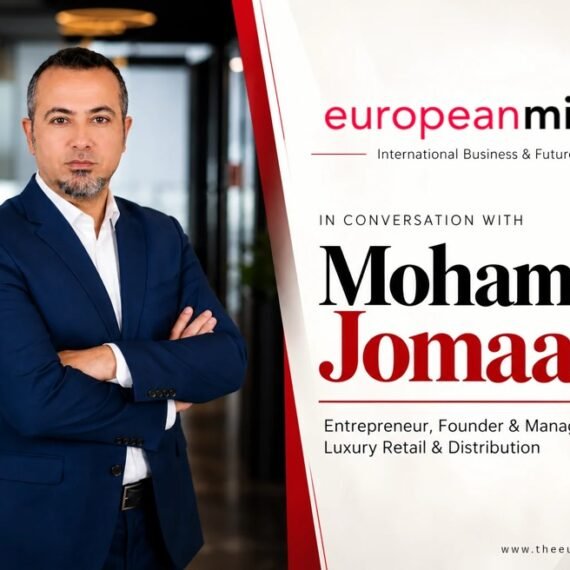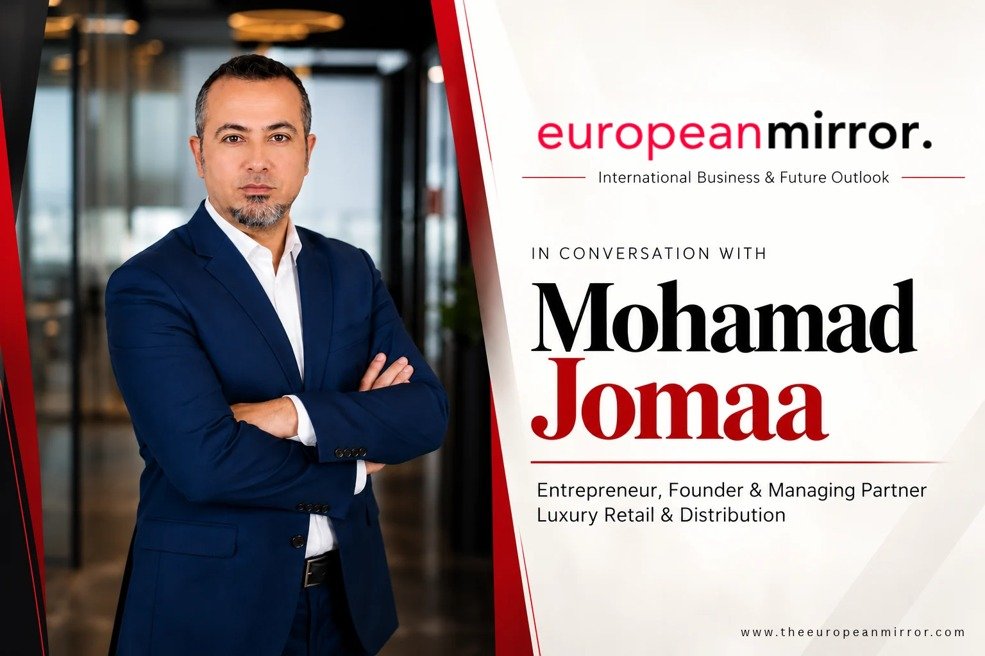
Mohamad Jomaa is an entrepreneur, founder, and managing partner with more than 25 years of experience in luxury retail and distribution. His career spans commercial operations, brand development, international partnerships, and business expansion across the GCC.
Through his ventures, Luxury Arena Glasses and Watches and Timeless Vision Goods Wholesalers, Jomaa works to connect international luxury expertise with an understanding of regional markets. His experience includes developing the Korloff Eyewear project at Paris Gallery Group and supporting the GCC expansion of CHILLIBEANS through WGI Group. He is also involved in the development of the first Franck Muller Eyewear Collection.
In this conversation with European Mirror, Jomaa shares his views on international business, successful partnerships, changing consumer expectations, and the leadership principles that guide his work.
Understanding the GCC Market
The GCC offers opportunities for international businesses, but entering the region requires more than bringing an established brand or business model into a new market. Jomaa believes that companies must combine ambition with a clear understanding of local customers, commercial conditions, and long-term execution.
“What lessons can European businesses learn from the rapid growth of the GCC market?”
“The most important lesson is that ambition must be supported by execution. In the GCC, businesses need to think long term while remaining capable of making decisions quickly. Over more than 25 years in luxury retail and distribution, I have learned that identifying an opportunity is only the beginning. The real work is bringing together the right product, partners, locations, people, and financial discipline.
European businesses have a great deal to offer through their heritage, craftsmanship, and brand expertise. However, entering the GCC successfully requires more than transferring an existing business model. It requires understanding local customers, building relationships, and recognizing that the region’s markets are not interchangeable. A strong brand identity should travel internationally, but its commercial approach must reflect the market it serves.
My experience developing luxury eyewear, supporting the GCC expansion of CHILLIBEANS through WGI Group, and building my own ventures has reinforced this balance between speed and discipline.
The lesson is not simply to move faster. It is to shorten the distance between strategy and execution without compromising the brand or the business fundamentals.”
Building Strong International Partnerships
Long-term partnerships are essential in luxury retail and distribution. Beyond commercial agreements, businesses must share an understanding of brand identity, customer experience, investment, and future growth.
“How do you build successful partnerships with international brands and organizations?”
“I approach partnerships as long-term commitments, not individual transactions. Before discussing commercial terms, I want to understand the partner’s ambitions, what makes the brand distinctive, and what both sides are prepared to contribute.
In luxury, a distributor or retail partner must do more than generate sales. They must protect positioning, represent the brand appropriately, and build sustainable demand. That requires alignment on pricing, distribution channels, customer experience, investment, and growth expectations.
One experience that shaped my approach was the Korloff Eyewear project at Paris Gallery Group. I identified an opportunity in luxury eyewear and led the project from concept development through manufacturing and commercial launch. Securing a ten-year exclusive GCC distribution agreement with Italian manufacturers gave us a long-term framework within which to build the business.
Today, through Luxury Arena Glasses and Watches and Timeless Vision Goods Wholesalers, I bring that same approach to supplier relationships and portfolio development.
We are also currently in the development stage of the first Franck Muller Eyewear Collection, envisioned as a very premium luxury collection. My priority is to ensure that the product’s design, quality, and positioning reflect the identity and expectations associated with the name.
Ultimately, successful partnerships depend on trust, clear responsibilities, and consistently delivering what you promise.”
Global Trends Shaping Business
Luxury consumers are becoming more selective, while technology is changing how businesses understand demand and manage operations. Jomaa sees a need for companies to balance innovation with financial discipline and personal customer relationships.
“What global business trends do you believe will have the greatest impact over the next few years?”
“I believe three developments will be particularly important: more selective luxury consumption, the practical application of artificial intelligence, and greater emphasis on business resilience.
First, I expect customers to become increasingly discerning about what deserves a premium. In my view, a recognizable name alone will not be enough. Brands will need to demonstrate distinctive design, quality, authenticity, and service. This is especially relevant when developing a new luxury collection: the product must justify its positioning, not simply inherit it.
Second, artificial intelligence and better use of data will influence how businesses understand demand, manage inventory, personalize communication, and allocate resources. Having implemented ERP and POS systems in previous roles, I have seen the importance of reliable information in supporting expansion. I see AI as a further opportunity to strengthen decision-making, not as a replacement for human judgment or relationships.
Third, I believe resilience will become a greater competitive advantage. Businesses will need disciplined cash-flow management, dependable suppliers, and a balanced mix of retail, digital, corporate, and B2B channels.
The strongest businesses will combine technology with human understanding, and ambition with financial discipline. In luxury, innovation should make the experience more personal, not less.”
Maintaining Brand Consistency Across Markets
Expanding into different regions requires businesses to protect what makes a brand distinctive while adapting to local customer expectations. Jomaa draws on his experience across finance, operations, logistics, category management, and commercial expansion to approach this challenge.
“How do you maintain consistency while expanding across different regions?”
“My principle is to standardize what defines the brand and adapt what helps it connect locally.
Product quality, brand positioning, service expectations, financial controls, and ethical standards should remain consistent. However, the assortment, communication, channel mix, and pace of expansion may need to differ between markets. Consistency does not mean treating every customer or region identically.
My background has helped me understand expansion from several perspectives. I began with experience across finance, operations, logistics, and category management at Paris Gallery Group, and later took on broader commercial and expansion responsibilities. That taught me that a strong customer-facing brand depends on many less visible systems working properly behind it.
When opening locations or entering new channels, I focus on clear responsibilities, capable local teams, staff training, inventory discipline, and shared performance measures. ERP and POS systems help create visibility, but managers must also understand the reasoning behind the standards they are expected to uphold.
I also believe in sequencing growth carefully. A prestigious location or promising market is not enough on its own; the operating model must be ready.
I would rather expand at a sustainable pace and protect the customer experience than grow quickly and weaken the brand.”
Defining a Lasting Legacy
For Jomaa, business success extends beyond revenue or expansion. He places importance on building lasting organisations, developing people, maintaining trust, and creating products that reflect a clear identity and long-term purpose.
“What legacy do you hope to leave through your business and leadership journey?”
“I hope to leave businesses that remain valuable beyond my personal involvement, relationships built on trust, and people who are better equipped to lead because we worked together.
My journey has taken me from learning the foundations of retail and operations to leading commercial teams, developing brands, and becoming a founder and managing partner. Each stage has reinforced my belief that leadership is not only about making decisions. It is about accepting responsibility for their consequences, for employees, partners, investors, and customers.
Through Luxury Arena and Timeless Vision, I want to build businesses that connect international luxury expertise with a genuine understanding of the GCC. I also want to demonstrate that this region can contribute to product development and brand creation, rather than being viewed only as a destination for finished products.
Projects such as the Franck Muller Eyewear Collection reflect that ambition: to help develop something distinctive, with a clear identity and long-term potential.
On a personal level, I want to be remembered as someone who honored his commitments, developed people, and pursued growth without compromising integrity.
For me, legacy is not simply the size of the business you build. It is the strength of what continues after you.”
Also Read:-
Didin Nasirudin on Strategic Communication & Business | European Mirror
10 Most Influential Entrepreneurs to Watch in 2026 | European Mirror