Entrepreneurs play an important role in how businesses grow and how new ideas reach the market. They start companies, solve problems, create jobs, and find new ways to serve customers. Some build businesses from the ground up, while others take existing companies in a new direction. The 10 most influential entrepreneurs featured in this edition come from different industries and backgrounds, but each has built a business journey worth following in 2026.
The 10 most influential entrepreneurs have taken different paths to build their businesses. Some have turned personal ideas into growing companies, while others have spotted gaps in the market and created services or products to meet those needs. Their work covers a range of industries, from technology and finance to healthcare, real estate, consulting, and consumer services. What they have in common is a clear focus on their work and a willingness to keep moving forward when things do not go as planned.
In 2026, the 10 most influential entrepreneurs featured here are people to watch as they continue to grow their businesses and explore new opportunities. Their stories show that building a business takes time, effort, good decisions, and the ability to learn from experience. By looking at their work and the choices they have made, readers can gain a better understanding of the people shaping businesses and industries today.
Meet The Entrepreneurs To Watch in 2026
Below are the 10 most influential entrepreneurs to watch in 2026, recognized for their business journeys, achievements, and contributions to their respective industries.
Amina Noor | Turning Personal Change into Purposeful Ventures

“Entrepreneurship, for Amina Noor, is about turning change into something of her own.”
For Amina Noor, entrepreneurship is not about following a single career path. It is about creating opportunities, building independently, and turning personal experiences into something with purpose. Based in the UK, Amina has built a growing portfolio across recruitment, fragrance, e-commerce, and creative enterprise, with an outlook that extends across the UK, Europe, and the Middle East.
A key part of her entrepreneurial journey is Talent Rose Ltd, a recruitment company connecting skilled professionals with opportunities across the UK, Europe, and the Middle East, with particular interests in the healthcare and technology sectors. Through Talent Rose, Amina has established a business that reflects her international approach and her interest in connecting people with opportunities across markets.
Her work also extends into the fragrance industry through Amina Oud, a brand inspired by her appreciation for distinctive Middle Eastern perfumery. With the venture, Amina is bringing together her interest in fragrance and her experience as a founder, creating a brand with its own identity and place within a different industry.
But Amina’s entrepreneurial story cannot be separated from her experience as an author. In When Ania Became Amina, she explores transformation, resilience, identity, and the process of rebuilding her life through major personal change. The book represents a deeply personal chapter of her journey and offers context for the perspective she brings to entrepreneurship today.
For Amina, independence is an important part of that journey. Building businesses on her own terms has strengthened her belief in entrepreneurship as a route towards financial independence and personal agency, particularly for women. She hopes her experiences can encourage other women to create opportunities for themselves, pursue entrepreneurship, and build lives that reflect their own ambitions.
Her academic journey continues alongside her businesses. Amina is currently studying Business and Entrepreneurship in the UK, bringing together formal education with practical experience across different ventures and industries.
The international dimension remains central to her vision. With interests and opportunities spanning the UK, Europe, and the Middle East, Amina aims to build sustainable businesses that can operate across borders while maintaining a clear sense of identity and purpose.
From founding Talent Rose to creating Amina Oud and publishing When Ania Became Amina, Amina’s journey brings together business, creativity, and personal transformation. Each chapter has taken her in a different direction, but they share the same underlying drive: to build something independently and use that experience to encourage others to do the same.
Her ambition now is to take what she has built further, creating businesses with international reach while continuing to champion entrepreneurship, independence, and meaningful personal growth.
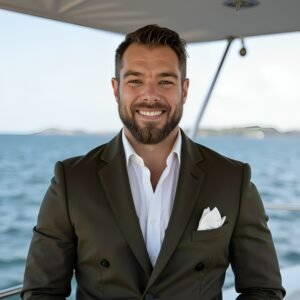
Kenneth Clark | Rethinking Who Health Data Belongs To
“People should not need a medical degree to understand their own health, and they should never have to surrender ownership of their most personal data to receive answers.”
For many people, having more medical information does not necessarily mean understanding their health better. Test results may sit in one system, medication records in another, genetic information somewhere else, while important details remain in a person’s own memory. American inventor, combat veteran, engineer, entrepreneur, and AI systems architect Kenneth “Ken” Clark believes the problem is not simply a lack of information. It is the way that information is organized, connected, and controlled.
That belief has led Clark into health technology. His path into healthcare came through engineering, industrial automation, manufacturing, operations, software, and AI—experiences that shaped his approach to complex systems. His goal is to give individuals a clearer way to understand their biological information while keeping them in control of how that information is used.
A Different Route Into Healthcare
Clark’s background is not rooted in traditional healthcare. Before entering biotechnology, he served as an infantryman in Afghanistan and later worked in engineering, industrial automation, and manufacturing.
The common thread throughout his career has been working with complex systems where information, technology, and human decision-making all have to function together in the real world. When he began looking at healthcare from that perspective, he saw a systems problem: enormous amounts of valuable information fragmented across providers, laboratories, applications, genetic testing platforms, and patients themselves.
The issue was not simply a lack of data. It was the inability to turn fragmented information into useful intelligence while keeping the individual in control.
From the Problem to EnigmaHealth.ai
In 2026, Clark launched EnigmaHealth.ai, the public home of OmniMind, as an attempt to address part of that problem. Clark’s response to that problem is Enigma Genetics, which represents the broader infrastructure and data-ownership vision behind the work. EnigmaHealth.ai is the health-facing platform, while OmniMind is the AI intelligence layer designed to help individuals organise and understand complex biological and health information.
OmniMind is designed to help people bring together information such as laboratory results, medical records, symptoms, medications, genetic reports, and doctors’ instructions. Rather than simply aggregating records, the goal is to build a developing, longitudinal understanding of an individual’s health across these different sources. It can turn this information into plain-language explanations, questions for healthcare professionals, appointment summaries, and a continuing health timeline.
The important distinction is that OmniMind is not intended to diagnose conditions, prescribe treatments, or replace medical professionals. Its purpose is to help people better understand the information they already have and arrive at healthcare conversations better prepared.
Keeping the Individual in Control

For Clark, the technology itself is only one part of the idea. The other is ownership.
Rather than automatically deciding what information belongs in someone’s health timeline, OmniMind proposes relevant signals and allows the individual to decide what becomes part of their record. The platform is also being designed to make the source and basis of information visible.
That philosophy extends into the architecture being developed by Enigma Genetics, with a focus on encrypted personal information, consent-based access, verifiable data provenance, auditability, and genomic and health-data interpretation. The aim is to make it possible for individuals to understand not only their information, but where it came from, how it was used, and who was permitted to access it.
The philosophy is captured in one line:
“We sell proof, not data.”
AI Needs to Know Its Limits
Clark’s view of AI in healthcare is also deliberately measured. He does not see artificial intelligence as a replacement for physicians.
Instead, he sees an opportunity for AI to help reduce the gap between the information available to patients and their ability to understand it. Trustworthy AI, particularly in healthcare, needs to distinguish between evidence, inference, and uncertainty. AI can help organise evidence, identify relationships, and improve human decision-making, but it should not create an illusion of certainty or replace physicians.
For Clark, a confident answer is not necessarily a correct answer. Technological confidence should never be mistaken for medical certainty.
Looking Beyond the Platform
His ambitions extend beyond building a health application. Clark wants to develop a trusted personal biological intelligence layer through which individuals can progressively understand their health over time—across medical records, laboratory information, genetics, medications, symptoms, and other biological signals—while maintaining meaningful control over the underlying information.
Longer term, that infrastructure could allow individuals to authorise specific uses of their information, understand who accessed it and why, and potentially participate in research or commercial opportunities on transparent terms.
That vision brings together the different parts of his career: engineering, automation, technology, cybersecurity, biological information, and the lessons he has gained from working in demanding environments.
At its heart, his work asks a straightforward question: what would healthcare look like if people could understand their own biology without giving up ownership of it?
Through Enigma Genetics and EnigmaHealth.ai Kenneth Clark is working towards that possibility.
“People should be able to understand their own biology without giving up ownership of it.”
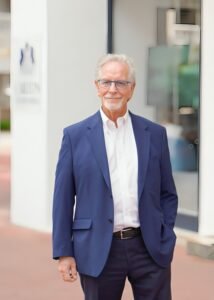
Philip Weiser | Shaping Luxury Real Estate on the French Riviera
“Luxury property is about more than the transaction. It is about understanding the people, the place, and the value that comes with both.”
Born in Wellington, New Zealand, and educated in New Zealand and Switzerland, Philip Weiser has built an international career across hospitality, marketing, real estate investment, and luxury property. His professional journey has taken him through Geneva, Bermuda, and New York, giving him experience across international markets long before he established himself on the French Riviera.
His early career was rooted in hospitality. He held senior positions including Director of Reservations & Sales with Princess Hotels International and later Marketing Director of the International Division of Trust Houses Forte. In 1975, he founded a London-based property management company specialising in high-end furnished rentals. After successfully selling the business, he moved to the French Riviera, where he began building his real estate ventures.
That move eventually led to the development of Carlton International, today associated with luxury property sales, villa rentals, investment advisory, property development, and property management across the Côte d’Azur, from Monaco to Saint-Tropez.
As CEO of Carlton Group, Philip oversees Carlton International, Carlton Signature, and Visua Concepts. Together, these businesses cover luxury real estate brokerage, investment consultancy, property asset management, marketing services, and international brand licensing.
With more than four decades of experience working with an international clientele, Philip has advised private buyers and sellers, investors, developers, and family offices on high-value transactions and property investments. His work combines his understanding of luxury real estate with the international perspective developed throughout his career.
His expertise spans luxury real estate, prestige villa sales and rentals, international property brokerage, investment and development, high-value negotiations, cross-border transactions, asset management, marketing, and brand development.
The international nature of his work is also reflected in the languages he speaks. Philip works fluently in English, French, and German, with conversational Italian and Spanish, supporting his ability to work across different markets and with clients from varied backgrounds.
The 30-year renown of Carlton International has incited Philp to share the brand with select real estate companies, intent on increasing their visibility and their prestige around the world.
Today, Philip’s French activities remain, nonetheless, centred on the French Riviera, where Carlton International connects buyers, sellers, investors, and strategic partners across one of the world’s most established luxury property markets. His career reflects a long-standing ability to move between industries and markets while building businesses around property, hospitality, investment, and international relationships.
Dev Akhbar | Building the Next Chapter of Healthcare Through AI
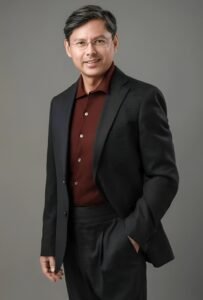
For Dev Akhbar, the idea of improving healthcare is not new. His journey began on the clinical and business side of the industry, where he founded a physiotherapy and sports injury clinic at 29 and built it over eight years before successfully exiting. That experience gave him a practical understanding of what it takes to run a healthcare business, beyond the clinical work itself.
His career later took him across Singapore and Greater China, including experience with institutions such as National University Hospital, Singapore General Hospital, and New Frontier United Family Healthcare. Working across different healthcare systems exposed him to many of the operational challenges that continue to affect the industry, from fragmented information and complex administration to inefficient processes and lost revenue.
It was this experience that eventually led Dev to a different question: could artificial intelligence help healthcare organizations work better, rather than simply digitizing the way they already operate?
That question became the foundation for Aureliz.ai, the company he created around healthcare revenue cycle management and revenue leakage. The aim is to help organizations identify where revenue is being lost, simplify complex workflows, and turn scattered information into useful insights.
What makes the idea particularly interesting is that Dev is looking beyond conventional analytics. His vision is for AI systems that can identify problems, suggest what should happen next, and eventually carry out defined tasks with appropriate human oversight.
For Dev, this is where agentic AI could have a particularly important role in healthcare. Healthcare organisations depend on thousands of connected processes, and even small inefficiencies can have a wider impact. Intelligent systems that can understand context, work across different sources of information, and take action within set boundaries could change how those processes are managed.
Aureliz.ai is now working towards strengthening its enterprise security and compliance capabilities, including SOC 2 and ISO 27001, while developing its presence within Singapore’s healthcare digital ecosystem. The company is also working with healthcare partners and pilots as it develops its platform and prepares for international expansion.
Dev’s own experience remains central to how he approaches the technology. Having built a healthcare business himself and later worked across different healthcare markets, he understands that innovation has to begin with a real problem. Technology may provide the answer, but only when the problem is understood properly.
His ambition for Aureliz.ai reflects that belief. Rather than simply adding another software layer to healthcare, he wants to build intelligent systems that can continuously identify inefficiencies, reduce administrative work, address revenue leakage, and help teams make better decisions.
For Dev Akhbar, the future of healthcare AI is therefore not simply about replacing manual tasks. It is about creating organisations that can understand, respond, and improve in real time.
Erwin Rader | Where Sport Becomes a Bridge Between Nations
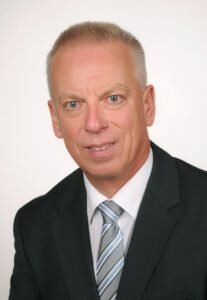
“Sport connects and brings people together.”
For Erwin Rader, sport has always represented more than competition. As the founder and CEO of ErRa SportSponsoringAgency in Vienna, he has spent years building connections between brands, athletes, sporting organisations and international markets. His current focus is taking that idea further—using sport, culture and talent development to strengthen relationships between Austria, India and the Middle East.

One of his latest initiatives is the Austrian-Indian Talent Exchange Association, established with his long-time partner Dipl.-Ing. (FH) Gerd Saalfrank. The association aims to deepen bilateral relations between Austria and India through culture, education, technology, innovation, sport, film, music, business and trade. At its heart is a simple objective: creating opportunities for talented people while bringing communities and countries closer together.

Rader’s approach is closely connected to his belief that unusual ideas can become real opportunities when people are willing to act on them. His winter-sports vision for the Middle East is one example. He sees the development of indoor skiing as an opportunity not only for sport, but also for tourism, public health, youth development and international visibility. His proposed model connects Austrian winter-sports expertise with emerging opportunities across the GCC and beyond.
To support this vision, Rader is working with Canadian ice and snow specialist Guy J.E. Cloutier, CEO of CTC Group, and Kemil Shah, Founder & CEO of Zillionaire Edition International Marketplace, whose company has worked on ski domes, resorts and winter-sports projects, including facilities in Shanghai and projects connected to the Beijing 2022 Winter Olympics. Together, they are looking at facilities designed to meet international standards while remaining sustainable.
India is another important part of Rader’s outlook. Through the new talent exchange association, he sees potential for Austrian expertise in areas such as football coaching and professional training to support young Indian athletes. The wider ambition goes beyond sport, with planned exchanges in areas ranging from technology and business to art and culture.
That spirit of exchange even extends to more unexpected ideas. Rader is exploring the possibility of bringing a camel racing event from the Middle East to Vienna, while an Austrian winemaker has shown interest in combining camel adventure rides with his vineyards.

For Rader, these ideas are connected by the same principle: look beyond traditional boundaries and create something that brings people together. Whether through sport, business, culture, or talent development, his work is driven by the belief that international relationships become stronger when people have opportunities to meet, collaborate, and build something together.
And for Erwin Rader, that is where the next opportunity begins.
David Wortley | Partnering with Machines to Expand Human Potential
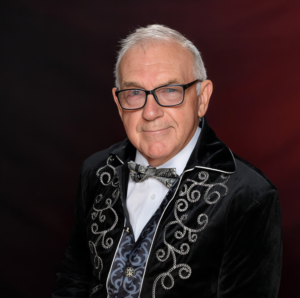
What if the most important question about technology is not what machines can do, but what they can help people become? For David Wortley, that question has shaped decades of work across technology, human potential, speaking, writing, and lifestyle medicine.
As a keynote speaker, author, and advocate for lifestyle medicine, David has consistently explored the relationship between technology and the human experience. His view is straightforward: technology matters most when it helps people live better, healthier, and more fulfilling lives rather than simply replacing human capabilities.
This thinking was at the heart of his 2012 book, Gadgets to God, which examines how humanity’s relationship with technology has changed within a single lifetime. From early gadgets that depended heavily on human skill to today’s AI systems designed to work alongside people, the book explores how technology has increasingly become a partner in human activity. Now available as an audiobook, Gadgets to God continues to raise questions around human connection, agency, and how people should use the tools they create.
David has also applied his interest in technology to something much more personal: his own health. Thirteen years ago, he began experimenting with wearable technology and mobile applications as part of an effort to gamify his approach to health and better understand what it takes to live well for longer.
That personal experiment developed into a wider interest in lifestyle medicine. David became involved with the British Society of Lifestyle Medicine and later served as a non-executive director of World Lifestyle Medicine Education Services. His focus has been on encouraging people to adopt healthier lifestyle practices, with an emphasis on prevention alongside the treatment of illness.
At 77, David continues to put that philosophy into practice. He walks five miles every day, takes no medication, and continues to speak at international conferences.
His ideas around technology and human potential will come together on 17 September 2026, when David is scheduled to speak at Keble College, University of Oxford, as Distinguished Keynote Speaker at the 18th Woman Leaders Forum and World Leaders Summit. His address, The Fifth Industrial Revolution: Partnering with Machines to Amplify Human Potential, explores his vision of human-machine collaboration and the possibilities that emerge when technology is used to enhance rather than replace people.
For David, the future is not about choosing between humans and machines. It is about understanding how the two can work together.
His personal brand captures that philosophy in three words: “the same but different.” It reflects his interest in making people look beyond the obvious, find unexpected connections, and remain open to ideas that could change the way they live and work.
LinkedIn | Instagram | Website | Facebook | Youtube | Tik Tok | X | Gadgets to Good Book | 360in360 Living Memories |
Dr. Darcell L. Streeter | Rethinking Leadership in the Age of AI

What happens when leadership stops being measured by speed, pressure, and constant urgency? For Dr. Darcell L. Streeter, the answer begins with learning differently. A learning scientist, global keynote speaker, and nonprofit CEO, she is exploring how artificial intelligence can transform the way people lead without losing sight of what makes leadership human.
Dr. Streeter’s work sits at the intersection of generative AI, culturally responsive design, learning science, and leadership development. Through her research and multiple organisations, she focuses on a question that is becoming increasingly important as AI changes the workplace: how can emerging technology serve multilingual and multigenerational learners without erasing their humanity?
She is the founder of B.HER™ Global, a leadership development and learning ecosystem, CEO of The Women’s Circle, Inc., a nonprofit that has served its community for 25 years, and founder of Positive Images Consulting, a learning and development firm established in 2005. Across these platforms, she has spent two decades translating applied learning science into leadership systems designed for real-world pressure.
A central part of that work is her development of five proprietary frameworks, including Softness as a Superpower™ and the PAWS™ Framework (Pause. Assess. Witness. Shift.). Rather than treating softness as the opposite of strength, her frameworks challenge conventional ideas around decision-making, leadership, and what it takes to perform effectively under pressure.
Her thinking also extends into her writing. Dr. Streeter is the author of the Softness as a Superpower™ series, Reflections of Becoming HER, and Prompt With Purpose. She also hosts Power of the Pause on Women Thrive TV, where she explores nervous system wisdom, radical rest, and the growing need to question burnout as a measure of leadership commitment.
Her academic background brings together theology, human services, and applied learning sciences. She holds a Master of Science in Human Services with a specialization in community and social services from Capella University and a Bachelor of Arts in Biblical Studies with dual concentrations in Pastoral Ministry and Church Teaching from SUM Bible College and Theological Seminary. She has also received an Honorary Doctor of Philosophy in Christian Leadership and Business from Cathedral Christian University, while her Doctor of Education in Applied Learning Sciences at the University of Miami is currently in progress.
Alongside her academic and entrepreneurial work, Dr. Streeter is an ordained minister and a Certified Nonprofit Executive through the Jim Moran Institute for Global Entrepreneurship at Florida State University.
Her published work includes “Speed Is Now Free. Judgment Is Not” in the Universal Journal of 21st Century Women’s Entrepreneurship, Leadership, Technology & Publishing, as well as her keynote from the Women Leadership and Women Health International Conference, published in the Journal of Women Leadership by Peercite Publishers. She is also a founding contributor to The Better Voice, writing about leadership, learning, and the human questions that artificial intelligence cannot answer for us.
Her work increasingly focuses on the practical relationship between people and AI. As a member of the advisory board of the Global Skill Development Council, an international credentialing body serving professionals across more than 190 countries, she contributes to its GSDC Certified Learning: AI-Native Leadership & Transformation series.
Her speaking engagements have covered topics ranging from the psychology of human-AI collaboration and ISO 42001 governance for RAG-powered AI systems to enterprise copilots for diverse workforces and learning and development strategies that measure meaningful outcomes.
Dr. Streeter has spoken at conferences in Paris, Bangkok, and Chicago and was named one of the Ten Women in the UAE to Watch in Business for 2026 by Arabian Business Times. Her frameworks have been applied across corporate, nonprofit, and community environments, with a consistent focus on helping leaders make decisions from clarity rather than crisis.
As artificial intelligence continues to reshape how organizations operate, learn, and grow, Dr. Streeter’s work offers a different way of looking at leadership. One that makes room for technology but does not allow technology to define the whole human experience.
At the center of her philosophy is a simple idea: leadership should come from wholeness, not hurry.
LinkedIn | Website | The Women’s Circle | Facebook
Instagram | Podcast: Women Thrive Media – Power of the Pause with Dr. Darcell Streeter
Jazmine de Luna | Making AI More Human, Practical, and Accessible

Artificial intelligence can often feel like a world built for programmers, large companies, and technology experts. Jazmine de Luna wants to change that. Known as “Your AI Bestie,” she is a Filipino entrepreneur, educator, and AI Systems Architect helping people understand how AI can become a practical part of their work and businesses.
As the Founder of LUNA AI Systems, Jazmine works with founders, professionals, and organizations to bring AI into everyday areas such as business operations, marketing, customer service, and decision-making. Her approach is simple: people should not have to be technical experts to understand what AI can do for them.
That belief has become central to her work. Rather than encouraging people to simply try one AI tool after another, Jazmine helps them think about the bigger picture: what problem are they trying to solve, where can AI help, and how can people and technology work together effectively?
“AI should not diminish human potential. It should multiply it,” says Jazmine de Luna.
Her work is now expanding beyond the Philippines, with a growing focus on Dubai and the wider UAE. As the region continues to invest heavily in technology and AI, Jazmine sees an opportunity to help Filipino founders, professionals, and businesses become more comfortable with the changes taking place around them.
For her, learning AI should not stop at knowing how to use a tool. It should lead to better ways of working and new opportunities.
Through LUNA AI Systems, she is working toward becoming a partner for Filipino entrepreneurs and professionals in the UAE who want to understand and adopt AI. Her focus includes training, business support, and helping people use AI in ways that make their work easier and more effective.
This connects closely with a much larger personal goal. Jazmine wants to empower one million Filipinos with AI.
She sees the potential of the Filipino community not simply in terms of its workforce, but in its creativity, intelligence, resilience, and ability to adapt. Her aim is to give more Filipinos the confidence to participate in the growing digital economy, whether they are employees, freelancers, creators, entrepreneurs, or business owners.
A major part of that effort is the AI Empowered Club, an online community created for people who want to learn how to use AI in practical ways. Members can explore ways to improve their businesses, create digital products, build simpler workflows, and find new opportunities using technology.
Jazmine believes that understanding the basics and knowing where to begin can make the technology far less intimidating. The idea is particularly important for people who may feel overwhelmed by how quickly AI is developing.
Her work also carries a strong focus on women and access. She believes AI should not belong only to large corporations or technology professionals. Women, small-business owners, independent professionals, and entrepreneurs can all use it to create opportunities and compete in a changing global economy.
As a Filipino woman building a career around AI, education, and entrepreneurship, Jazmine hopes to bring an inclusive perspective to the UAE’s growing technology community. Her focus is on making sure that people are part of the transformation rather than feeling left behind by it.
Ultimately, Jazmine’s work is less about technology for its own sake and more about what people can do with it. She wants AI to help people work smarter, build stronger businesses, and explore possibilities that may previously have seemed out of reach.
For “Your AI Bestie,” the future of AI is therefore not simply about creating smarter technology. It is about helping people become confident enough to use that technology to build something better.
Christos Karapiperis | Building Microbial Intelligence for a More Resilient World
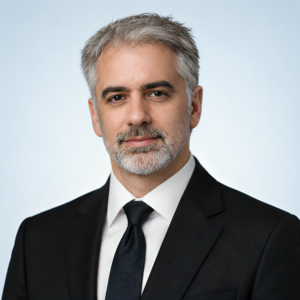
What if the biological signals hidden in water, soil, and air could be understood before they became public-health or environmental emergencies? For Christos Karapiperis, that question sits at the centre of his work across artificial intelligence, bioinformatics, environmental health, and public-health preparedness.
As CTO and Co-founder of DNA Sequence, Christos leads the company’s technology strategy, platform architecture, and development of its Microbial Intelligence Platform. The AI-enabled system is designed to transform complex microbial and multi-omics data into evidence-based insights that can support better decisions.
His work is built around a deceptively simple ambition: making the invisible visible. By reading genetic signatures found across environmental sources, the platform seeks to help identify biological risks earlier and provide organisations with a clearer understanding of what those signals may mean.
With more than two decades of experience spanning IT, data platforms, research, and bioinformatics, Christos has built his career around turning complex scientific information into practical action. At DNA Sequence, that experience is being applied to areas including environmental surveillance, water-quality monitoring, food safety, antimicrobial-resistance intelligence, and broader One Health applications.
The company’s approach is grounded in the One Health principle, which recognises the close connection between human health, animal health, food systems, and the environment. Rather than treating these areas as separate challenges, DNA Sequence brings them together through microbial data and analysis.
Its Microbial Intelligence Platform combines accredited laboratory capability with next-generation sequencing, deterministic bioinformatics, and governed AI interpretation. The aim is to move beyond simply identifying microorganisms and instead connect biological evidence with environmental context and decision-making.
That distinction is important to Christos’s vision. Microbial testing can produce enormous amounts of information, but information alone does not necessarily create understanding. The larger opportunity lies in helping laboratories, public authorities, industrial operators, and health professionals interpret what the data is showing and determine what action may be appropriate.
Christos holds a PhD in Big Data Analytics and Exposomics from Aristotle University of Thessaloniki (AUTH), Greece. His academic and professional work brings together computational biology, explainable AI, genomics, environmental epidemiology, and digital transformation, fields that are becoming increasingly important as environmental change and health risks become more closely connected.
For him, technology is valuable when it improves the ability of people and institutions to understand complex problems and respond to them effectively. In microbial intelligence, that means moving from isolated laboratory results toward a more connected picture of biological and environmental risk.
As biological threats, climate pressures, and the volume of scientific data continue to grow, that capability becomes increasingly important. Through DNA Sequence’s Microbial Intelligence Platform, Christos Karapiperis is working toward a future where microbial data is not simply another laboratory output but a meaningful layer of intelligence that can contribute to healthier, safer, and more resilient societies.
Yasmine Gueddiche | Redefining the Business Behind Fashion
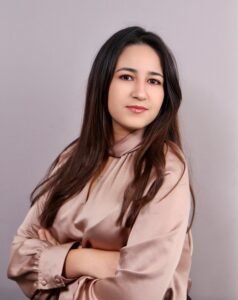
Yasmine Gueddiche’s career reflects a meeting of two worlds. Born in Paris and connected to both French and Arab heritage, she developed an early appreciation for fashion while also becoming interested in the business decisions that make the industry work. Her move to Dubai opened a new chapter, giving her the opportunity to work within one of the region’s most active retail markets. There, she found a space where her understanding of fashion could be combined with a more analytical approach to merchandising and commercial performance.
Today, Yasmine is part of adidas Emerging Markets, working across retail merchandising within a network of more than EUR 950 million in annual business. Her responsibilities cover areas such as inventory, trading, pricing, and profitability. She has been involved in introducing auto-replenishment systems to address stock availability, using analytics to give retail teams better insight, and refining pricing and markdown approaches. Her work sits largely behind the scenes, but its effect can be seen in how efficiently products are managed and how quickly businesses can respond to what customers want.
What sets Yasmine apart is her understanding that fashion retail is not purely a numbers game. A spreadsheet can show sales patterns and inventory levels, but it cannot fully capture why customers respond to one product and overlook another. That requires observation, commercial judgement, and an understanding of the market. Yasmine sees the Middle East as particularly interesting in this regard. Its diverse consumers and fast-moving retail environment create opportunities to question established practices and find approaches that are better suited to the region. She brings data into those decisions without losing sight of creativity and instinct.
As her career develops, Yasmine remains interested in improving the way fashion businesses make decisions and operate in changing markets. She is also passionate about supporting young women entering the industry and sharing what she has learned along the way. Her journey from Paris to Dubai has given her a perspective that is both international and practical. For Yasmine, progress in fashion retail is not about chasing every new trend. It is about understanding the market, making informed choices, and finding better ways to connect the creative side of fashion with the realities of business.
Conclusion
The 10 most influential entrepreneurs featured in this list show that building a successful business takes more than a good idea. It requires patience, hard work, careful decisions, and the ability to learn and adjust along the way. Although they work in different industries, each entrepreneur has created a path of their own through their work and experience.
As 2026 moves forward, the 10 most influential entrepreneurs will have new chances to grow their businesses, take on new challenges, and explore new ideas. Their journeys are worth following for what they have achieved so far and for what they may build next.
Read more:
The Power List: 10 Leaders Shaping Tomorrow’s World
Top 5 Leaders Making an Impact in 2026