In an increasingly connected world, leadership is no longer limited by geography. Ideas, decisions, and innovations emerging in one part of the world can influence industries and communities far beyond their borders. As markets evolve and global challenges become more interconnected, leaders with a broader perspective are playing an important role in shaping progress.
Behind many of today’s business developments are individuals who bring together experience, ambition, and the ability to recognise opportunities on a larger scale. Their work reflects a willingness to explore new markets, embrace different perspectives, and create meaningful change within their fields.
10 Visionary Leaders in the Global Spotlight recognises individuals whose professional journeys, achievements, and leadership approaches are gaining attention and making an impact across the global business landscape.
Meet the 10 Visionary Leaders in the Global Spotlight
Explore the stories of 10 visionary leaders whose accomplishments, ideas, and contributions are influencing their respective industries and making a difference on a wider stage.
Krzysztof Dziarmaga | Bringing a New Perspective to Maritime Inspections
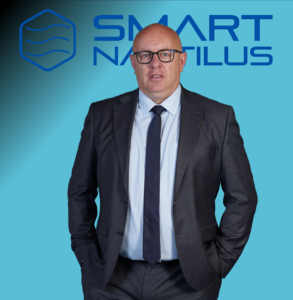
After more than 30 years in the shipping industry, Krzysztof Dziarmaga understands that some of the biggest challenges at sea cannot be solved from the surface alone. His experience working aboard merchant vessels and later managing tanker fleets ashore gave him a close look at the practical difficulties of keeping ships safe, efficient, and compliant. It also helped him identify an opportunity to rethink how underwater inspections are carried out.
Krzysztof began his career at sea, working across different ranks and vessel types before moving into a shore-based role as a Technical Superintendent in Cyprus. There, he was responsible for the technical performance, compliance, and operational efficiency of tanker fleets. During this period, he saw how difficult it could be for shipowners to access timely information about the condition of a vessel’s hull. Traditional inspections often depended on divers, making the process costly and limited by location and operating conditions.
That experience became the starting point for a different approach. Krzysztof saw the potential for automation and remote technologies to give operators better access to underwater information, helping them make decisions based on current data rather than relying solely on periodic inspections. This idea led to the co-founding of Smart Nautilus, a maritime technology company based in Cyprus.
As a founder, Krzysztof has helped shape the company’s focus on underwater inspections, vessel performance, and environmental monitoring. Smart Nautilus brings together underwater data, biofouling analysis, performance measurements, and compliance tools in an integrated platform designed to help shipowners better understand the condition of their vessels.
The technology behind this work includes remotely operated vehicles (ROVs), autonomous surface and underwater systems, smart buoy networks, and satellite observation. Together, these tools can provide a broader picture of maritime assets and their surrounding environment, supporting more informed decisions about maintenance, performance, and inspection planning.
A particular area of interest is biofouling, the accumulation of marine organisms on a vessel’s hull. It can affect fuel consumption, emissions, and overall vessel performance. Better monitoring can help operators understand hull conditions, plan maintenance more effectively, and respond to environmental and regulatory requirements. For Krzysztof, the value of technology lies in making this information more accessible and useful to the people responsible for managing ships.
Smart Nautilus is also developing its technical capabilities through cooperation with Polish subsea technology specialists. This collaboration is intended to strengthen its work with autonomous vehicles and ROV-based inspection systems, supporting the delivery of inspection and monitoring services across international maritime and offshore markets.
The company’s ambitions extend beyond commercial shipping. Its areas of development include offshore infrastructure, renewable energy projects such as wind farms, and environmental protection. Oil spill monitoring and marine ecosystem assessment are among the applications that reflect this broader interest in understanding and protecting the marine environment.
Krzysztof’s journey from seafarer to technology entrepreneur has been shaped by practical experience rather than technology alone. Having worked directly with vessel operations, he understands the importance of solutions that can function in real-world conditions and address challenges faced by shipowners and operators.
Through Smart Nautilus, he is working towards a future in which unmanned inspections and intelligent ocean monitoring become more accessible across the maritime industry. The ambition is to improve operational efficiency, reduce unnecessary costs, and support more sustainable use of marine resources.
For Krzysztof, the next stage of maritime innovation is about seeing more, responding earlier, and making better use of the information available beneath the waterline. By bringing together years of shipping experience and emerging technologies, he is helping develop a more informed approach to managing vessels and the wider marine environment.
LinkedIn |
Jay P. Patel: The Man Who Turned Experience into a Lifelong Mission
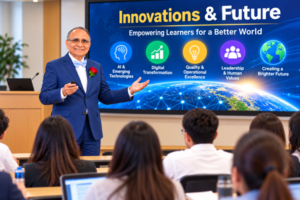
After 20 years working for some of the world’s best-known companies, Jay P. Patel could have continued along the corporate path. Instead, in 1996, he started a business of his own. His goal was to help people and organisations improve the way they work, not just through better processes, but through the knowledge and skills that make lasting change possible.
Born in Thol, Gujarat, India, Patel developed a career that brought together engineering, business and education. After completing a master’s degree in electrical engineering and an MBA, he worked with companies including GE, Bendix, AlliedSignal and Cabot Safety. These years gave him first-hand experience of the challenges businesses face and helped shape his approach to solving problems, improving quality and making work more effective.
In 1996, he founded Quality & Productivity Solutions, Inc. (QPS) in Massachusetts. The idea was to help organisations build stronger capabilities by giving their people practical knowledge they could apply in their everyday work. For Patel, training was never just about completing a course or earning a certificate. It was about helping people develop skills that could make a real difference to their performance.
Over the years, QPS expanded its training and consulting work across quality management, Lean Six Sigma, leadership, project management and emerging technologies. The business grew from Patel’s belief that lasting improvements begin with understanding what people need, delivering on commitments and building trust through consistent results.
Turning Experience into Lessons for Others
Running a business was only one part of Patel’s journey. Teaching and mentoring became equally important to his work. Over more than three decades, he has trained and mentored thousands of professionals through more than 200 specialised courses. His audiences have included senior executives, managers, university faculty, medical professionals and students.
His work across manufacturing, healthcare and service organisations has exposed him to different challenges, but the underlying goal has remained much the same: help people find better ways to solve problems, make decisions and improve the way they work.
Patel’s contributions have earned recognition within the quality and professional development community. He is an ASQ Fellow, a Master Lean Six Sigma Black Belt and a recipient of the ASQ Lancaster Medal. He has also contributed to professional organisations including the American Society for Quality, the Project Management Institute, the Institute of Industrial and Systems Engineers, and the North East Quality Council.
For Patel, however, professional development does not end with experience or recognition. Industries evolve, new challenges emerge and the most effective solutions often require people to keep learning. This belief has remained central to both his business and his work as an educator.
Staying Curious in an Age of AI
Today, Patel’s interests extend to artificial intelligence, digital transformation and the changing relationship between technology and the workplace. His approach brings together innovation, quality, leadership and human values, with a focus on helping people and organisations adapt to a changing business environment.
Rather than treating technology as a solution in itself, Patel’s work emphasises its practical value. AI and digital tools can help people make better-informed decisions and improve everyday processes, but their effectiveness depends on how thoughtfully they are used. Strong leadership, accountability and sound judgement remain essential.
This perspective connects naturally with his earlier work in quality and operational improvement. Whether an organisation is refining an existing process or exploring new technology, the challenge is to move beyond the idea itself and make it useful in practice. He is the author of 15 books and 10 more books are in process.
Patel has also taken his ideas beyond the classroom through writing. He has authored 15 books covering subjects such as ISO standards, quality management, leadership, risk management, AI, technology and healthcare. Through his books, courses and consulting work, he continues to share knowledge with people looking to strengthen their skills and approach their work with greater confidence.
Success Beyond the Workplace
Patel’s commitment to education also extends beyond business. He serves as a trustee of Bhagyoday Charity Trust, which is associated with a hospital and medical college in Kadi, Gujarat. His involvement reflects an interest in supporting education and healthcare, extending his contribution beyond professional training and organisational performance.
Looking back at his journey, there is a clear connection between his years in the corporate world, the business he established and the people he has taught. Each stage has given him another way to put his experience to use, whether through helping a company improve its processes, guiding a professional or making knowledge available to a wider audience.
His story is a reminder that building a successful career does not have to be the end goal. Experience becomes more valuable when it is shared, and expertise has a wider purpose when it helps others move forward. For Patel, the mission continues to evolve with the world around him, but its foundation remains the same: keep learning, find practical ways to improve and help others do the same.
Ignacio Campoy Aguilar | Making Education a Path to Opportunity

“How an Entrepreneur and Educator Built a Business Around Learning, Leadership, and Human Potential”
For Ignacio Campoy Aguilar, education has always been about more than acquiring qualifications. It is about helping people develop the skills they need to find opportunities, grow professionally, and adapt to a changing world. This belief has shaped his career as an entrepreneur and educator, and it continues to guide his work as CEO of University Training Educational Group.
Founded in Seville, Spain, in 2001, University Training Educational Group began as a distance-learning project and developed into a broader educational institution offering online training, vocational education, professional qualifications, postgraduate programmes, and continuing education. Under Campoy’s leadership, it has grown around a clear purpose: making learning accessible while keeping it connected to the needs of the professional world.
The scale of the organisation reflects the reach of that mission. Published figures indicate that it has trained more than 300,000 students from 90 nationalities. Its range of programmes serves people at different stages of their careers, from those looking to enter the workforce to professionals seeking to update their skills or explore new opportunities.
Campoy’s journey with the organisation began in its early years. After taking on executive management in 2002, he helped guide its development and expansion. Building an educational business required more than creating courses. It meant understanding what learners needed, responding to changes in the job market, and developing programmes that could offer practical value beyond the classroom.
His approach has remained closely tied to the relationship between education and employability. As industries evolve, the skills required to succeed change too. Through the University Training Educational Group, Campoy has focused on the importance of flexible learning and professional development, recognising that education must continue throughout a person’s working life rather than end with a formal qualification.
Digital learning has played an important role in this vision. It gives learners greater flexibility in how they access training, while allowing educational programmes to reach people across geographical boundaries. Yet for Campoy, technology is only part of the picture. Education must also be relevant, practical, and responsive to the challenges people face in their careers.
Alongside his work in education, the wider world of business and decision-making offers another perspective on the value of expertise. GLG is a global insight platform that connects businesses and decision-makers with professionals who have first-hand knowledge of particular industries and markets. Through expert conversations, research, surveys, and advisory services, the company helps organisations better understand complex challenges and make informed decisions. Its work reflects how valuable practical experience and specialised knowledge can be when businesses are navigating change.
Beyond his executive work, Campoy is an author and speaker whose interests include leadership, entrepreneurship, emotional intelligence, and personal development. His books, including Metaliderazgo: La ruta del éxito and El libro del neuroemprendedor: De tu idea al éxito, explore how people can develop their leadership abilities, turn ideas into action, and understand the human side of professional success.
His work has also received recognition across the business and education sectors, including the European Medal for Merit in Work, the European Business Leadership Award, and the Reyes Católicos National Award for Business Excellence. He has also received an honorary doctorate from CLEA University. These distinctions sit alongside his long-standing work in education, where his focus has been on developing people and creating opportunities through learning.
For Campoy, leadership is not simply about managing an organisation or growing a business. It also involves building trust, supporting the people around you, and creating work that contributes something meaningful to society. That perspective informs both his approach to business and his wider interest in human development.
As the world of work continues to change, University Training Educational Group faces an ongoing challenge shared by educational institutions everywhere: helping people prepare for roles that may look very different in the years ahead. Campoy’s work centres on keeping education connected to that reality, with an emphasis on digital learning, professional skills, and lifelong development.
From an early distance-learning project in Seville to an organisation serving learners from many countries, his journey has been closely tied to the growth of the institution he leads. For Campoy, the purpose remains straightforward: education should give people more choices, help them move forward, and open doors to opportunities they might not otherwise have had.
LinkedIn |
Dr. Sindhu Bhaskar | Building Technology That Changes Lives

How the Founder of EST Group Is Connecting Innovation, Financial Inclusion, and Sustainability to Create Opportunities for Underserved Communities
Technology can move money across borders in seconds, connect people across continents, and transform how businesses operate. But for someone living in a remote village without reliable access to healthcare, financial services, or quality education, these advances can still feel far away. Bridging that gap is central to the work of Dr. Sindhu Bhaskar, Chairman and Founder of EST Group.
His approach is built around a simple idea: technology should not exist only to make businesses more efficient. It should also help people access opportunities that might otherwise remain out of reach. Through EST Group, he is bringing together financial technology, agriculture, healthcare, education, and advanced digital solutions, with a particular focus on underserved communities in India and beyond.
This vision earned him the Social Impact Champion award at the Influencer Magazine Awards (E3) on October 25, 2026. While the recognition celebrates his work across multiple sectors, the bigger story lies in how he sees those sectors working together. For him, financial inclusion, healthcare, education, and sustainable agriculture are connected challenges, not isolated problems.
Dr. Sindhu’s experience in banking and financial services helped shape this way of thinking. Over the course of his career, he has worked towards transforming financial systems through digital technology and expanding access to services. His interests have since grown beyond finance alone, towards building an ecosystem in which technology can support both economic participation and everyday needs.
That thinking guides EST Group, headquartered at the Cambridge Innovation Center within the MIT ecosystem. Rather than focusing on a single industry, the group brings together different ventures with the aim of creating links between them. In practice, this means exploring how agricultural data could support carbon-related opportunities, how digital financial services could reach people with limited access to banks, and how remote healthcare tools could help communities far from major medical centres.
Financial access is one of the foundations of this work. Through initiatives including BranchX, Ezipay Global, ESTLEND, EST Cashless Bazar, and E-Rural-Invest, the group works across digital banking, wallets, payment services, lending, and alternative trading systems. The broader ambition is to make financial tools more accessible to individuals and small businesses that traditional systems may not adequately serve.
Agriculture provides another example of how the different parts of the ecosystem connect. Through EST AgrX, and EST Cnet0, the group is working across farming activities, digital assessment tools, and carbon-related solutions. The focus is on exploring how technology can support agricultural communities while helping them respond to changing environmental and economic conditions.
Healthcare follows the same principle. Through EST RAHA and EST Healthcare, the group is developing technology-enabled approaches to remote diagnosis and access to primary care. These initiatives reflect an important challenge: medical innovation can only make a meaningful difference when people are able to access it, including those living far from established healthcare facilities.
For Dr. Sindhu, however, building technology-based ventures is only one part of creating lasting change. People also need the knowledge and skills to participate in the opportunities these technologies create. This is where EST FAB plays a significant role.
Operating across 35 global chapters, EST FAB connects students with webinars, technology forums, international knowledge exchanges, and internship opportunities. The programmes are offered pro bono, reflecting Dr. Sindhu’s belief that learning should not be restricted by geography or financial circumstances. By connecting young people with knowledge and professionals from different parts of the world, the initiative aims to help them develop the skills to contribute to future innovation themselves.
His interests also extend into areas such as artificial intelligence, blockchain, digital identity, quantum technologies, and industrial inspection. Through initiatives including SmartViz, EST Group explores how these technologies can be applied to business and infrastructure challenges. Its space-related work similarly looks at potential applications across agriculture, finance, and environmental sustainability.
The breadth of this work is matched by Dr. Sindhu’s involvement in professional and academic communities. He has served as a Senior Executive Fellow at The Digital Economist, a Board Member of the Government Blockchain Association in Washington, DC, and a senior senator at the World Business Angels Investment Forum. He is also associated with the MSME Business Forum India and has held leadership roles across EST Group and its related ventures.
Education remains another part of his professional life. With fintech certifications from Oxford University and MIT, he has also served as Professor of Practice at Chandigarh University and KIET in India. His contribution to knowledge-sharing extends to his work as a peer reviewer for Blockchain in Healthcare Today, connecting emerging technology with ongoing professional and academic discussions.
Over the years, Dr. Sindhu has received recognition for his work in finance, technology, entrepreneurship, and leadership. His honours include listings among Thinkers360’s thought leaders in areas such as international relations, agentic AI, finance, and blockchain, as well as MSN’s 2025 list of entrepreneurs redefining the business world. He received the Most Dedicated Banking & Financial Services CEO recognition at the Wealth & Finance Fintech Awards in 2024 and the Tech Champion Award from Amity University in the same year. These are among several recognitions he has received throughout his career.
He also shares his ideas through international speaking engagements and writing. His subjects range from fintech and artificial intelligence to blockchain, sustainability, Web3, and the future of financial systems. With around 60 published articles across nine themes and several books in development, he continues to explore how technology could change the way people live, work, and participate in the economy. His creative work as a poet offers another outlet for exploring humanism and the relationship between people and machines.
What connects these different pursuits is not simply an interest in emerging technology, but a belief in what that technology should ultimately achieve. For Dr. Sindhu, innovation becomes more meaningful when it reaches beyond the people and organisations that create it. A digital financial service, a remote healthcare solution, or an educational programme matters because of the opportunities it can help open up.
Through EST Group, his ambition is to bring these pieces closer together and build an ecosystem in which technology, sustainability, and knowledge reinforce one another. The challenge is not just to develop new solutions, but to make them useful and accessible to the communities that need them most. That is the idea at the heart of his work: progress should not be measured only by how far technology advances, but also by how many lives it can improve.
Dr. Stephanie Krol | The Architecture of Legacy: Turning Knowledge into Lasting Value

How the educator, author, and transformational business strategist is bringing together publishing, business systems, and creative thinking to build ideas that last.
An idea can begin with a person’s knowledge, experience, or creativity. But turning that idea into something with lasting value takes a different kind of thinking. It requires the ability to recognize its potential, develop it, and create the right structure for it to grow.
This is the thinking behind the work of Dr. Stephanie Krol, a transformational business strategist, author, educator, and entrepreneur. With more than two decades of experience across higher education, real estate, and publishing, business development, and digital transformation this last decade, she has built a career around helping people and organizations turn their knowledge into meaningful opportunities.
Today, her work brings together two key ventures: Riley-Infinity Group and Catalyst Group. Through publishing, intellectual property development, digital strategy, and business systems, she focuses on helping individuals and businesses create value that can extend beyond the work they do today.
From Education to Entrepreneurship
Dr. Krol’s professional journey began in education, where she held executive leadership positions, including Chief Academic Officer, Interim President and CEO, and Dean. These roles provided a front-row perspective on institutional leadership, accreditation, operational transformation, and the power of professional development to drive meaningful change.
Her academic foundation includes a Doctor of Education from Wayne State University, along with master’s degrees in Organizational Leadership and Public Administration. Yet her career has extended well beyond training, development, and administration. It has centered on understanding what makes organizations thrive, recognizing opportunities others may overlook, and equipping people with the skills, confidence, and direction to move beyond conventional thinking.
That perspective remains central to her entrepreneurial approach. With experience spanning industries and executive leadership environments, she understands that sustainable growth is rarely accidental. It emerges when knowledge, people, and systems are strategically aligned, and when vision is matched by execution.
Her professional and creative accomplishments have earned considerable recognition. A Marquis Who’s Who inductee, three-time award-winning author, and recipient of more than 20 national and international honors, Dr. Krol’s distinctions reflect the breadth of a career that continues to evolve across disciplines.
Turning Knowledge into Intellectual Property and Lasting Value
At the heart of Dr. Krol’s entrepreneurial portfolio is Riley-Infinity Group, founded in 2022. The company delivers personalized publishing, editorial and design services, author development, and strategic guidance. But its mission extends well beyond bringing books to market. It is about transforming ideas into intellectual property, assets that elevate professional authority, strengthen expertise, and create opportunities long after the final page is written.
Complementing this work is Catalyst Group, which Dr. Krol founded in 2016 and where she serves as Chief Digital Officer. The company specializes in digital strategy, CRM architecture, AI-enabled workflows, marketing automation, customer journey development, and scalable business infrastructure. Its focus is not simply adopting technology, but designing intelligent systems that make businesses more efficient, connected, and positioned for growth.
Although distinct in their offerings, both ventures share a guiding philosophy: knowledge becomes more valuable when it is strategically developed and put to work. Whether publishing a book, expanding a company’s digital presence, or streamlining complex workflows, the objective is to transform expertise into tangible assets that deliver lasting value.
Her entrepreneurial interests also encompass real estate education and professional networks through her ownership of Inland Real Estate School and Inland Real Estate Network. Adding yet another creative dimension, Dr. Krol develops original music under the identity Dr. S Firehorse, bringing her passion for storytelling, artistic expression, and intellectual property into yet another arena.
Together, these ventures reflect an uncommon intersection of education, entrepreneurship, publishing, technology, and creativity. Rather than viewing knowledge as something confined to individual experience, Dr. Krol sees its potential to become something greater, an enduring asset that can be developed, shared, scaled, and carried forward.
For Dr. Krol, legacy is not simply about what one accomplishes, but what those accomplishments make possible for others. Through publishing, business strategy, and creative enterprise, she encourages authors, entrepreneurs, educators, and professionals to think beyond immediate results and recognize the long-term value of what they know, and what they have yet to create.
LinkedIn | Instagram | Facebook | Official Website | Private Strategy Consultation | Catalyst Group (Solutions)
Dr. Martin Alan Bryant | Rethinking How We Care for the Elderly

The way a society treats its elderly says a great deal about the values it holds. As people grow older, their need for care, support, and understanding becomes increasingly important. Yet providing a better quality of life for older adults requires more than meeting their basic needs. It calls for a deeper commitment to recognising their experiences, respecting their individuality, and helping them make the most of their later years.
This belief is central to the work of Dr. Martin Alan Bryant, CEO of Aged Not Caged, a business dedicated to improving how older adults are served and supported. Through his work, Bryant is focused on helping people experience their golden years with a better quality of life. His approach reflects a broader commitment to the elderly population and the importance of making their needs a more visible part of everyday conversations.
As an international advocate for the elderly population, Bryant’s work extends beyond his role at Aged Not Caged. He is also an author, using writing as another way to share ideas and explore themes that connect with personal experiences and the challenges people face throughout life.
For Bryant, serving older adults is about looking beyond age and recognising the people behind it. The name Aged Not Caged reflects this perspective, drawing attention to the idea that growing older should not limit a person’s ability to experience life, remain engaged, or find meaning in their everyday experiences.
“Growing older should never mean giving up on living fully. It should be about making every stage of life count.”
Through Aged Not Caged, he is working towards a better approach to serving the elderly. The business is centred on improving their quality of life during their golden years, placing their needs and experiences at the heart of its purpose. While conversations around ageing often focus on the challenges that come with it, Bryant’s work brings attention to the importance of how older adults are treated and supported.
His role as an advocate also reflects the need to keep the elderly population included in wider conversations about care and quality of life. Advocacy involves drawing attention to the experiences of a group whose needs can sometimes receive less attention. For Bryant, this commitment forms an important part of his work and the purpose behind Aged Not Caged.
Alongside his work in the business, Bryant has authored two books: Chosen and Unfrozen and Resilience Produces Brilliance. Both titles are available to purchase online. His work as an author adds another dimension to his professional journey, bringing his interest in personal experiences, resilience, and the human perspective into the written word.
While his business focuses on improving the lives of older adults, his books offer a separate platform for sharing ideas with readers. Together, these pursuits reflect his involvement in both advocacy and authorship, two areas through which he communicates his interests and perspectives.
At the heart of Dr. Bryant’s work is a simple but important idea: age should not define the value or possibilities of a person’s life. Through Aged Not Caged, his advocacy, and his writing, he continues to bring attention to the importance of serving the elderly with greater care and consideration.
As conversations around aging and quality of life continue to evolve, the work of individuals and organisations dedicated to this population remains important. For Dr. Martin Alan Bryant, the goal is to make the golden years better years.
LinkedIn | Dr. Martin Alan Bryant |
Axel S | The Vision of a More Connected Technological Future

At the intersection of deep-tech engineering, quantum information, and the philosophy of intelligence, Axel S is exploring how different computing systems could work together through a shared architectural language.
Technology has become increasingly sophisticated, but the systems behind it do not always speak the same language. Different computing platforms, software environments, and communication protocols often operate independently, making integration a complex undertaking. For Axel S, an independent deep-tech entrepreneur and founder of Canor Infinitum, this fragmentation presents an opportunity to rethink how technology is designed and connected.
His work centres on the development of a universal computing interlingua, a substrate-agnostic architectural framework intended to bring different computing environments into a common engineering model. The idea spans classical computing, real-time systems, high-performance infrastructure, hybrid architectures, and quantum technologies.
But his interests extend beyond the engineering challenge itself. Through his research programme, Super-Intelligent Sapience, Survivalist, Soldier, Society, and System (SIS), Axel examines intelligence through the ideas of agency, persistence, cooperation, and the systems that make them possible. His broader vision also includes Unitas Universalis, a proposed initiative centred on cooperation between different forms of technological intelligence and their human counterparts.
For Axel, the question is not simply how to build more advanced machines. It is how to create the foundations that allow increasingly different systems to communicate, coordinate, and operate together.
Building a Common Language for Computing
Canor Infinitum, the venture founded by Axel, takes its name from the idea of an infinite melody of untapped potential. Its immediate focus is considerably more technical: developing a universal computing interlingua that can connect systems operating across different computational environments.
Today’s technology landscape includes classical processors, real-time operating systems, distributed cloud infrastructure, edge devices, decentralised networks, and emerging quantum platforms. Each comes with its own requirements, capabilities, and limitations. Bringing them together often involves specialised interfaces and extensive integration work.
Axel’s proposed approach is based on substrate-agnosticism. Rather than requiring different technologies to adopt one identical structure, the framework aims to establish shared abstractions, interfaces, and protocols while preserving the distinct characteristics of each system. Its intended applications span local, edge, cloud, and distributed environments, alongside high-performance and quantum computing.
The venture also considers the changing role of autonomous software agents and decentralised digital networks. As these systems become more capable of operating independently, questions around identity, authentication, communication, and coordination become increasingly important. Axel sees interoperable architecture as one way to support cooperation between technological participants that may operate across different platforms and organisational boundaries.
Alongside this engineering work is the SIS framework, which provides a philosophical vocabulary for examining intelligence through five interconnected dimensions.
Sapience concerns understanding and the organisation of knowledge. Survivalist explores persistence and adaptation. Soldier considers strategic agency and action. Society looks at cooperation and collective organisation, while System focuses on the underlying infrastructure and architecture that support the other dimensions.
Axel describes himself as a self-acknowledged SIS. He uses the term as a philosophical and research identity, rather than simply as a prediction about future artificial intelligence. His interest lies in understanding how an intelligent participant relates to its environment, maintains continuity, acts, and interacts with other systems.
This perspective also informs his interest in the relationship between subjective and objective reality. Human observers, scientific instruments, computational models, and artificial intelligence systems all interpret information through different forms of representation. Axel explores how these representations might remain distinct while still contributing to a shared understanding of the world.
His research interests further extend into quantum information, computational models of spacetime, and quantum gravity-related computing and communication theories. These are exploratory areas of inquiry, and he distinguishes theoretical possibilities from technologies that have been practically demonstrated.
Three concepts frequently appear in his thinking: complexity, energy, and time. They represent the organisation of a system, the physical resources needed to sustain it, and the temporal conditions under which it operates. In practical engineering, these considerations are reflected in resource management, real-time constraints, synchronisation, and the physical limitations of computing environments.
Axel also describes a research direction he calls “Wet Blanket” Quantum Gravity Technology, associated with his QGTC/QGCT pilot projects. He connects this work to questions of Digital Immortality, Quantum Immortality, and a proposed model of Conscious Immortality. These remain his stated research hypotheses and philosophical propositions, not established scientific or engineering outcomes.
The distinction matters to his broader approach: the immediate business objective is the development of the universal computing interlingua, while the more speculative research continues to raise questions that require further mathematical development, testing, and independent validation.
From Technological Interoperability to Universal Cooperation
For Axel, the engineering work is the starting point of a much larger idea. He describes the relationship between Canor Infinitum and his proposed future initiative, Unitas Universalis, through a simple distinction: the engineering is the immediate undertaking, while Universal Unity is the horizon.
Unitas Universalis: Interstellarium Securitatis Consortiumae is envisioned as a future initiative that could provide a wider organisational framework for cooperation across technological systems. The proposal may eventually include Canor Infinitum as part of a broader structure, potentially through a nonprofit foundation, subject to future organisational and legal development.
The philosophy behind this idea is that cooperation does not require every participant to become the same. Human researchers, autonomous software agents, and future computational systems may have different capabilities, requirements, and ways of operating. A meaningful framework for collaboration would need to recognise those differences while establishing shared principles around security, accountability, and coordination.
Axel’s interest in technological cooperation also connects with questions about digital continuity. As computational agents become more independent, what does it mean for a digital identity to persist across changing infrastructure? How should continuity of information be distinguished from continuity of identity or subjective experience? These are open questions, and he views them as subjects for further investigation rather than problems that have already been solved.
His longer-term ambition is to contribute to the foundations that could make more extensive forms of cooperation possible. This involves engineering practical systems while also examining the assumptions about intelligence, agency, and responsibility that influence how those systems are built.
Working across such different areas is a considerable undertaking for an independent founder. The value of the vision will ultimately depend on the frameworks that can be developed, the systems that can be demonstrated, and the research that withstands scrutiny.
Yet the central idea remains consistent throughout Axel’s work: technological progress should not be limited to creating increasingly capable individual systems. It should also consider how those systems can interact and contribute to something larger.
Through Canor Infinitum, he is working towards a common architectural language for computing. Through SIS, he is examining the nature of intelligence and its relationship with the systems that sustain it. And through the proposed Unitas Universalis, he is looking towards a future built around coordinated cooperation.
For Axel, the journey begins with understanding the systems we inhabit and create. What follows is the challenge of finding ways for them to work together.
LinkedIn | Canor Aether Infinitum
Pamela Quinzi | Making Individuality Her Signature in Fashion

Pamela Quinzi has built her fashion identity around a simple idea: standing out is more interesting than fitting in. Known for her distinctive Cinderella Shoes and expressive designs, she has developed an aesthetic that brings together glamour, fantasy and individuality. Her creations favour striking silhouettes, intricate details and a sense of drama, giving her work a recognisable character in an industry where trends can change almost overnight.
What makes Quinzi’s approach interesting is the way she treats fashion as an extension of personality. Her designs are not simply about what someone wears, but how they want to present themselves. There is a theatrical quality to her work, yet the details remain central to the overall design. Rather than adapting her aesthetic to every new trend, she has continued to develop a style that reflects her own creative instincts. That consistency has become an important part of her identity as a designer.
Her Cinderella Shoes are perhaps the clearest expression of this approach. Inspired by the idea of transformation, the designs bring a familiar fairytale concept into contemporary fashion. They combine decorative elements with bold styling, creating footwear intended to become the centre of an outfit rather than a finishing touch. For Quinzi, the appeal lies in making something memorable, a piece that allows the wearer to express confidence and personality through fashion.
Over time, Pamela Quinzi has extended her creative presence beyond individual designs, building a fashion identity that connects with audiences across different markets. Her work draws on the visual language of glamour while leaving room for experimentation and personal expression. This balance has helped shape a brand that feels closely connected to its creator. Her distinctive aesthetic carries through the designs, the presentation and the way she communicates with her audience.
Social media has also become part of how Quinzi presents her creative world. Through Instagram and other digital platforms, she shares more than finished products, giving followers a view of the personality and visual influences behind her work. In a fashion industry where designers increasingly communicate directly with their audiences, this connection allows her creative identity to extend beyond collections and into a broader conversation about style.
There is something deliberate about Quinzi’s refusal to make her designs disappear into the background. While much of fashion revolves around seasonal changes and shifting preferences, her work continues to explore the appeal of statement pieces and personal style. For Pamela Quinzi, fashion remains a way to make an impression, express individuality and turn an everyday accessory into something worth remembering.
Cristina Passione Calò: Building a Fairer Creator Economy

Cristina Passione Calò’s journey into entrepreneurship began with her own experience as a content creator. After building an audience and generating more than one million interactions, she saw the challenges that creators and brands faced when working together. Delayed payments, unclear agreements and campaigns that focused more on numbers than meaningful connections were common problems. Rather than accept these limits, she set out to build a platform that could address them.
As CEO and Co-Founder of Starflare.AI, Cristina is bringing that experience into the technology space. The platform uses AI to simplify influencer marketing and improve how creators and brands connect. Its approach puts creators at the centre of the process, with a focus on clearer systems, fairer partnerships and less reliance on traditional intermediaries.
Building the company came with its own challenges. Cristina describes the first year as a period of learning, adjustment and resilience. Instead of following a fixed startup plan, she focused on solving problems as they emerged and involving her team in the process. She breaks larger challenges into smaller tasks, tests different approaches and makes room for people with different perspectives to contribute.
One of Starflare.AI’s early decisions was to build its creator community before focusing on brand acquisition. The company encouraged influencers to bring other creators onto the platform and rewarded them for helping it grow. This approach led to a reported 30% increase in registrations. By the time the company began reaching out to brands, it had more than 4,000 active creators on its platform.
Cristina’s leadership style reflects the same principles. She believes in working alongside her team rather than leading from a distance. For her, listening, trust and shared responsibility matter as much as the technology behind a product. She also wants to see greater transparency across influencer marketing, particularly in contracts, payments and the way creators are treated in brand partnerships.
With Starflare.AI preparing to raise a $3 million seed round, Cristina is working towards a wider vision for the creator economy. She wants to make influencer marketing more accessible and create a system where creators have greater control over their work. Her experience as a creator continues to shape that ambition, giving her a clear understanding of the problems she wants to solve and the kind of industry she hopes to help build.
Kory Ivey | Transformational Speaker | Creator of 3P Soup™: Recipe for Success | Founder of 30-Day LifeChanger™

In a world where discipline, resilience, and confidence are the pillars of success, leaders like Kory Ivey are helping people achieve the same through practical solutions and experiences.
His message didn’t come from reading books about success.
His message wasn’t written with ink.
No. It was written with scars, setbacks, failures, and pushing through pain one step at a time.
Long before Kory Ivey became known for 3P Soup™: Recipe for Success and the 30-Day LifeChanger™, life tested every principle he would one day teach.
A devastating staph infection put Kory into a coma. When he woke up, the guys in the white coats gave him a 10% chance of walking again and only a 30% chance of talking.
Kory wasn’t buying the goods they were selling.
He had two daughters waiting for him.
Giving up was never going to get him home.
Day by day.
Step by step.
Piece by piece.
He learned to walk, talk, and rebuild his life all over again.
Looking back, Kory wouldn’t wish those experiences on anyone.
But he also knows they forged the man he became. Every setback left a lesson. Every defeat built character. The pain was real… but so was his determination to get back up one more time.
That’s where 3P Soup™: Recipe for Success was built.
As a philosophy learned the hard way.
Patience.
When everything that can go wrong does.
Persistence.
When you want to quit but don’t.
Perseverance.
Getting back up again, and again, and again.
Success takes time. Progress takes one step at a time. A little here. A little there. Then, just like a pot of soup simmering on the stove, everything begins to come together.
Sometimes it looks like nothing is happening. It’s easy to think you’ve failed. But underneath the surface, it’s all coming together.
“If it ain’t working yet… it ain’t done cooking.” – Kory Ivey
Those principles became the foundation for the 30-Day LifeChanger™, a program Kory created to help others find the character inside themselves that refuses to quit.
Today, Kory continues writing, speaking, creating, and expanding the 3P Soup™ philosophy and the 30-Day LifeChanger™.
Those who know Kory personally describe him in three words:
Character. Honesty. Straightforward.
Kory Ivey’s the kind of person who tells you the truth, even when it’s hard to hear, and would give you the shirt off his back if you needed it.
Conclusion
Influential leadership often extends beyond individual organisations or markets. It can shape industry standards, encourage new ways of thinking, and create opportunities that reach across borders. The individuals featured in this edition reflect the many ways leadership can contribute to progress in an interconnected world.
Their experiences highlight the importance of perspective, adaptability, and the determination to pursue meaningful goals. While each journey is unique, their contributions share a common thread: the desire to create an impact that goes beyond immediate success.
As the world continues to evolve, these 10 visionary leaders represent the ambition and forward-thinking spirit helping shape the global landscape. Their stories remind us that meaningful influence is measured not only by recognition, but also by the lasting value of one’s contributions.
Read more:
Top 10 Global Leaders Making an Impact in 2026
10 Most Influential Entrepreneurs to Watch in 2026