Leadership takes different forms across industries and countries. Some leaders build businesses from the ground up, while others improve established organisations, create new opportunities, or find better ways to solve familiar problems. Their journeys are shaped by experience, difficult decisions, and the ability to keep moving forward when challenges arise.
The Top 10 Global Leaders featured in this article come from different professional backgrounds, each with a distinct story to share. Their work reflects the many ways leadership can influence businesses, industries, and the people around them.
In 2026, making an impact means more than achieving personal success. It also means building trust, creating value, and making decisions that support long-term progress. These leaders offer a closer look at what that can mean in practice.
Top 10 Global Leaders To Watch As 2026 Comes To An End
Below are the Top 10 Global Leaders Making an Impact in 2026, recognised for their work, professional journeys, and contributions to their respective fields. From business and technology to finance, entrepreneurship, and other industries, each brings a different perspective to leadership.
The stories of these Top 10 Global Leaders highlight different paths to achievement. Some have grown their businesses through years of hard work, while others have introduced fresh ideas or helped their industries respond to changing demands. Together, they reflect the range of experiences and approaches shaping leadership today.
Gellan Watt | Building Bold Businesses, Agencies, and Second Chances

What does it take to build a successful business without relying on outside investment or debt and then walk away from it ready to start again?
For Gellan Watt, the answer has been a mix of ambition, resilience, creativity, and a willingness to make bold decisions. A UK Agency Advisor and NED director, Gellan has spent more than two decades building, advising, investing in, and transforming businesses across the agency and startup landscape.
His entrepreneurial journey began in 2003, when he founded his first agency. What started as an independent business went on to become a UK Top 10 Agency and was named UK Agency of the Year. After merging with other partners, Gellan helped grow the group to around £60 million in revenue and 350 people, achieved without external investment or debt. He eventually exited the business in 2016.
During those years, his work brought him into contact with some of the world’s most recognisable brands and organizations, including Apple, John Lewis, the BBC, Heineken, Beckham, Pinterest, uSwitch, Barbour, Marshall, and Wyke Farms. His entrepreneurial interests also extended beyond the UK, with agency investments and ventures in the Netherlands, the United States, and Saudi Arabia. He also served on the global board of AMIN Worldwide.
The years following his exit opened a different chapter. Rather than stepping away from the agency world, Gellan began working closely with founders and leadership teams, advising some of the UK’s fastest-growing independent agencies. He has also held PLC board positions, founded the positioning studio Imposition, and been involved in an agency buy-and-build.
His experience extends into the startup world as well. He has invested in and advised some of the UK’s fastest-growing startups while taking on leadership roles across the wider creative and business community. He is currently Creative Chair of the Alliance of Independent Agencies and Chair of FilmPunks, while also advising on mergers, acquisitions, and exit structures.
Today, Gellan works with agency founders and brands on growth and transformation, taking on roles as a consultant or board advisor. His approach draws on the experience of someone who has been on both sides of the table: building companies himself while also helping other leaders navigate growth, change, and difficult decisions.
For Gellan, sharing those experiences is also part of his work. He writes the Bold Moves newsletter on Substack and is the author of One Bold Move. His writing reflects a wider interest in entrepreneurship and the choices that shape both businesses and the people behind them.
There is plenty more on the horizon. Over the next 12 months, Gellan is working towards two new books while also preparing to launch a health-tech startup and a men’s skincare brand with his team. It is another example of a career that has never stayed in one place for long.
Alongside business and entrepreneurship, Gellan speaks about neurodiversity, resilience, and personal experience. One part of his story is particularly important to him: he is proudly in recovery. That experience adds a personal dimension to his perspective on resilience, showing that rebuilding can apply to much more than businesses.
From founding an agency in 2003 to growing a £60 million group, investing across international markets, advising founders, sitting on boards, writing books, and building new ventures, Gellan Watt’s career has been shaped by movement and reinvention.
His story is ultimately not just about building successful companies. It is about knowing when to make a bold move, learning from what comes next, and continuing to build with experience on your side.
Pegasus Wong | Building Bridges Between China and the Arab World

Business leaders are often introduced through their titles, companies, and achievements. But those details only tell part of the story. What matters just as much is how a person learns to recognise an opportunity, understand a market, and turn an idea into something that can work across borders.
For Pegasus Wong, international business has been a journey of looking beyond individual transactions and seeing how different industries, markets, and economies can work together.
Today, he serves as Vice Chairman of the World Federation of Free Trade Zones, while also being the Founder of Qatar Belt and Road Group and Pegasus Global Development (Holdings) Ltd. He is also Chairman of the China-Arab Committee of the Asia Pacific Economic Leader United Association and the Former Chairman of the China-Arab Investment and Trade Association.
His business interests stretch across real estate, energy, international trade, technology development, commodities, and cross-border investment advisory. This range is significant because it reflects a career that has not been confined to one industry or one type of opportunity.
Instead, Pegasus has built his work around understanding where different areas of business intersect.
Seeing Opportunity in a Changing World
International markets rarely stand still. Investment patterns change, technology reshapes industries, and governments develop new priorities. For business leaders working across borders, keeping pace requires more than commercial knowledge. It requires the ability to recognise what is changing and understand what those changes could mean in practical terms.
This is particularly relevant to Pegasus’s work in Qatar and the wider GCC, where economic development is creating opportunities across infrastructure, technology, energy, and other sectors.
His current work includes supporting opportunities aligned with Qatar National Vision 2030, while helping connect Chinese capabilities in areas such as smart cities, renewable energy, and digital infrastructure with emerging opportunities in the region.
Rather than viewing these sectors separately, his work brings them into a wider investment picture.
Building Across Different Industries
One of the defining features of Pegasus Wong’s career is the breadth of his interests.
Real estate requires a different understanding from energy. Technology operates differently from commodities, while cross-border investment brings its own complexities. Working across these areas means constantly moving between different business environments and understanding what each requires.
His portfolio reflects this willingness to explore beyond a single field. It also points towards a broader view of entrepreneurship, one where experience in one sector can inform decisions in another.
The result is a career shaped not by following one fixed path, but by recognising opportunities as they emerge.
When Business Meets Culture
Although his work is international in scale, Pegasus’s experience in Qatar taught him that understanding a market cannot be separated from understanding the people within it.
When he first arrived in Qatar in 2016, he spent considerable time in majlis gatherings, listening to local elders and learning about the customs and traditions that influence everyday life and business.
That experience gave him a different perspective on what it means to operate in a market that has its own pace and expectations.
“I realised that business here is not a transaction, it is a relationship that spans generations. My family’s background in shipping gave me a global perspective, but it was my commitment to immersing myself in local customs from the rhythm of the workweek to the importance of family honour that opened doors.”
For Pegasus, this understanding has become part of working internationally. It is not simply about taking one business model from one country and applying it somewhere else. Different markets require their own understanding.
Connecting Ideas, Capital, and Expertise
Much of the conversation around international investment focuses on capital. But capital alone does not necessarily create successful projects.
Projects also need knowledge, expertise, local understanding, technology, and people capable of bringing different sides together.
This is where Pegasus’s work sits at an interesting intersection. His involvement with Chinese investors and local stakeholders creates opportunities for different forms of expertise to meet.
Chinese capabilities in technology and infrastructure can be considered alongside local knowledge and regional priorities. The aim is not simply to move investment from one place to another, but to find areas where different strengths can work together.
A Different Measure of Success
For Pegasus, business success is not limited to the value of a deal or the size of an investment.
His experience has reinforced the importance of patience, humility, loyalty, and respect. These qualities have influenced the way he approaches long-term business relationships and international projects.
“Business here unfolds at its own pace, often guided by inshallah and the rhythms of the Islamic calendar. We respect that. We never push for shortcuts, and we never equate speed with efficiency. True efficiency is measured by the strength of the relationship, not the swiftness of the closing.”
It is a perspective that challenges one of the most common assumptions in modern business: that faster is always better.
Looking at What Comes Next
The next phase of global business is likely to be shaped by closer connections between technology, infrastructure, investment, and sustainability. For Pegasus, this creates an opportunity for China and the Arab world to develop new forms of cooperation.
He sees potential in combining Chinese technical expertise with local entrepreneurial knowledge while maintaining the cultural identity and values of the region.
That balance may become increasingly important as economies modernise and technology becomes more deeply integrated into everyday life.
For Pegasus Wong, the future is therefore not simply about expanding into more markets. It is about understanding how those markets are changing and identifying where meaningful opportunities can be created.
His career reflects that approach. From establishing businesses and working across multiple industries to developing connections between investors, institutions, and markets, his focus has remained on looking beyond the obvious opportunity.
And perhaps that is what makes his journey distinctive: not simply crossing borders, but learning how to think beyond them.
Prof. Dr. M. S. S. El Namaki | Where Strategic Thinking Meets the Age of AI
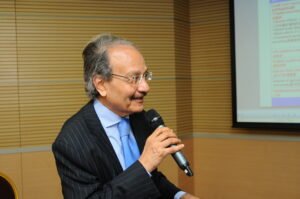
Management has never been a field that stands still. The questions businesses face change with technology, markets, and global conditions, and the ideas that once shaped boardrooms often need to be reconsidered. Few academic careers reflect that constant evolution as closely as that of Prof. Dr. M. S. S. El Namaki, whose work has moved across strategic management, entrepreneurship, international business, and, increasingly, artificial intelligence.
With academic degrees from the University of Brussels, Erasmus University, and an executive program at MIT, Prof. El Namaki has spent decades working between academia and business. His career has included teaching, consulting, institution building, executive leadership, and extensive research, giving him a perspective that connects management theory with the realities faced by organisations.
A Career Shaped by Strategic Thinking
A major part of his academic journey was his work at the Maastricht School of Management (MSM) in the Netherlands, where he served as founder and Dean from 1984 to 2002. During this period, he introduced the first MBA in the Netherlands in 1985 and later helped introduce the first MBA in China in 1988.
His influence on management education has extended well beyond those milestones. Prof. El Namaki has developed and introduced MBA, EMBA, DBA, and PhD programs in countries including the Netherlands, China, Egypt, Brazil, Poland, Kazakhstan, Syria, Singapore, Malaysia, and Indonesia.
Taking Management Education Around the World
For an academic whose work has crossed so many borders, teaching has naturally become an international pursuit. Prof. El Namaki has taught at institutions including MSM in Maastricht, Kellogg in Chicago, Jiao Tong University in Shanghai, Beijing-based institutions, and the University of Sheffield in the United Kingdom, among others.
His work reflects an understanding of management that is not limited to one country or one business environment. Teaching across different regions has allowed him to engage with varied approaches to leadership, entrepreneurship, and organisational strategy.
From the Classroom to the Corporate World
His professional experience has also taken him outside the traditional boundaries of academia. Prof. El Namaki has held executive positions with Philips in Eindhoven, McKinsey in London and Dar es Salaam, and Time Inc. in Amsterdam.
He has also consulted for organisations across different markets and delivered executive seminars internationally. His clients have included major organisations such as China Pacific Insurance Corporation (CPIC) in Shanghai and Abraaj in the United Arab Emirates, alongside work involving the European Union, the World Bank, and the Government of the Netherlands.
This combination of academic and practical experience has informed much of his approach to strategic thinking.
A Body of Work Built Over Decades
Prof. El Namaki has published ten books and more than one hundred articles, with several of his works being used as teaching material in MBA and DBA programs around the world.
His books cover a wide range of strategic questions. Strategy and Entrepreneurship in Arab Countries, published by Macmillan in 2008, examined entrepreneurship and strategy in the Arab context. Strategic Thinking for Turbulent Times followed in 2014, while Strategic Thinking in the Age of Artificial Intelligence explored the growing role of AI in management.
His 2024 book, Neo Strategic Management, Conceptual and Operational Foundations of Tomorrow’s Strategic Thinking, continues his exploration of how management thinking may evolve in the years ahead.
Exploring What AI Means for Strategy
Artificial intelligence has become an increasingly visible part of his recent academic work. His publications have examined subjects including AI and business strategy, systems approaches to artificial intelligence, and the possibility of artificial neurons developing plasticity of their own.
Rather than treating AI as simply another technological development, his work looks at its wider implications for the way organisations think, plan, and make decisions.
His research reflects a broader question about how strategic thinking should respond when technology itself begins changing the environment in which businesses operate.
Recognition for Academic and Professional Contribution
His research and writing have received recognition over the course of his career. Among his published work are prize-winning and trend-setting articles addressing management thinking and the application of AI to business strategy.
Prof. El Namaki has also received several government and non-government distinctions. These include a Distinction Award from the Government of Malaysia in 2016, the China Friendship Award from the Government of the People’s Republic of China in 2018, and the Honourable Shield of the University of Alexandria, Egypt, in 2024.
Continuing to Ask What Comes Next
Prof. El Namaki’s career has consistently followed the changing questions of business. From helping establish MBA education in new markets decades ago to examining the strategic implications of artificial intelligence today, his work has remained focused on how organisations can understand and respond to change.
His multidisciplinary expertise brings together strategic management, AI, globalisation, and leadership, connecting academic ideas with practical business applications.
Perhaps that is what makes his career particularly interesting. It has not been built simply around preserving established management theories, but around continuing to question them and exploring what strategic thinking may need to become next.
Boyd Lowry | Where Service Meets the Future of Home Care

Some careers are built around a single profession. Others are shaped by a value that stays constant even as the work changes. For Boyd Lowry, that value has always been service. From his years in the U.S. Marine Corps to his work supporting older adults and their families, the idea of being useful to others has remained a steady part of his journey.
Growing up in Ridgewood, New Jersey, Boyd was surrounded by two very different forms of service. His father was a minister and his mother was a nurse. That early environment gave him an appreciation for both community and care, lessons that would later take on a very different meaning when he joined the Marine Corps and served on active duty from 1982 to 1986.
His military years included deployment to Lebanon and participation in Operation Urgent Fury in Grenada. Those experiences demanded discipline, adaptability, and the ability to remain focused when circumstances were unpredictable. But perhaps more importantly, they reinforced the importance of looking after the people around you.
When Boyd eventually returned to civilian life, he entered the world of entrepreneurship and built experience across several businesses. Yet, over time, he found himself looking for something that felt more personal. His own experiences with aging and caring for loved ones had shown him how difficult it can be for families to find dependable support, particularly when health needs, memory loss, changing routines, and caregiver stress all come into the picture.
That led Boyd and his wife, Sara, to open FirstLight Home Care of Bergen County in Glen Rock, New Jersey. The business gave him an opportunity to combine his experience as an entrepreneur with something much closer to the values he had grown up with. The focus was not simply on providing care, but on helping people remain comfortable, independent, and supported in their own homes.
FirstLight provides services including companion care, personal care, dementia and Alzheimer’s support, respite care, and care for veterans. But running a home care business also introduced Boyd to a challenge that had little to do with the actual act of caregiving.
A great deal of time was being spent on everything surrounding care.
Care coordinators could find themselves dealing with callouts, schedule changes, routine communication, and other administrative demands instead of spending that time with clients, caregivers, or the work needed to grow the business. Boyd began asking a simple question: what if technology could take some of that work away without taking the human element out of care?

That question led to FirstLight’s work with Arya Health and the introduction of an AI employee into its operations. Rather than using AI to replace the people delivering care, Boyd used it to handle repetitive tasks such as caregiver outreach, scheduling support, and after-hours communication.
The results demonstrated what he had hoped for. FirstLight achieved 2.5x growth in weekly care hours without expanding its core office team. More importantly, the change gave its human staff more time to focus on clients and caregivers.
For Boyd, that distinction matters. Technology is useful when it creates more space for people to do the work that requires empathy, judgment, and a personal connection. It is not about making care less human. It is about removing some of the unnecessary work that can get in the way of human care.
This thinking has also made Boyd a voice in wider conversations about the future of home care. Through podcast appearances and community platforms, he has spoken about AI, aging, business, veterans’ care, and the challenges families face when looking after older relatives. His work through Bergen County Wellness News has also allowed him to share information with families about areas such as VA benefits, elder law, and healthy aging.
What makes Boyd’s story stand out is that his different careers do not feel as disconnected as they might at first. The Marine Corps, entrepreneurship, and home care may belong to very different worlds, but each has involved responsibility, decision-making, and looking out for others.
Today, Boyd is helping FirstLight explore what home care can look like when technology is used thoughtfully. His experience suggests that the future does not have to be a choice between technology and human connection. Done well, one can create more room for the other.
And perhaps that brings his journey back to where it started. Service has remained constant. The tools have simply changed.
Gerald Wood | Architecting High-Performance Organizations for the AI Age

The biggest challenge for businesses entering the AI era may not be learning how to use new technology. It may be understanding what happens to the people who have to work with it. For Gerald Wood, sustainable performance depends on getting both sides right. Technology can change how work is done, but motivation, judgement, strengths, and a sense of purpose still shape how well an organisation performs.
As Founder and CEO of AC Authentic GmbH, Wood has built his work around bringing these two worlds together. Based in Germany and working internationally, AC Authentic combines behavioural science, workforce assessment, strengths-based development, strategic consulting, and applied artificial intelligence. Its identity is captured in three words: Architects for Change.
The company’s approach is organised around #NextGenWork, with two closely connected areas. #FutureHuman looks at motivation, strengths, leadership, teamwork, and organisational culture, while #FutureTech focuses on AI agents and intelligent workflows that can help solve practical business problems. Wood believes neither side can deliver lasting results on its own. Technology without committed people rarely creates sustainable value, while people-focused development without technological progress can leave organisations struggling to keep pace.
That belief has been shaped by a career that began well before today’s AI boom. Wood has worked across corporate leadership, public communication, behavioural science, and entrepreneurship. Before founding AC Authentic, he held senior management positions within METRO Group and served as Press Spokesperson for the Brandenburg State Parliament. He later became Managing Director of Gallup Germany, where he helped introduce and establish the Gallup Engagement Index in the German market.
One particular milestone came in 2001, when Wood secured funding for Gallup’s first major workplace study in Germany. At a time when employee engagement was not yet a common boardroom concern, the work helped bring greater attention to the relationship between how employees experience their work and how organisations perform.
That experience also revealed a problem Wood continued to see across organisations. Businesses tend to know their financial numbers, customers, processes, and operational performance in considerable detail. Yet they can sometimes have a surprisingly limited understanding of what motivates their employees, where their strengths are being used effectively, and what prevents people from contributing their best work.
It was this gap between organisational strategy and human reality that led Wood to establish AC Authentic. What began as a management consultancy has developed into a transformation company working with organisations across healthcare, retail, industry, and professional services. The goal is not simply to advise leaders about change, but to help them understand what is happening inside their organisations and then act on it.
A major part of that philosophy is measurement. Wood believes that a successful transformation cannot be judged by how positive people feel immediately after a workshop or training programme. Leaders need evidence of what has actually changed, where problems remain, and whether the steps being taken are improving the organisation over time.
This led to the development of the A5 Intrinsic@Work® Index, a workforce diagnostic designed to measure five conditions linked to intrinsic motivation. These include daily enthusiasm, whether people’s strengths fit their roles, constructive feedback, emotional connection to their team and organisation, and a deeper sense of meaning and contribution.
The diagnostic takes approximately 60 seconds to complete, making it possible for organisations to gather regular feedback without turning employee assessment into a lengthy exercise. Individual anonymity is protected, while the wider results can help leaders identify patterns across teams, departments, and different levels of the organisation. Repeated measurements can then show whether those conditions are improving or declining.
For Wood, however, collecting data is only the starting point. AC Authentic connects those findings with leadership development, team interventions, organisational sprints, and performance indicators. The purpose is to move from understanding a problem to actually changing the way people work together and how the organisation operates.
He takes much the same practical approach to CliftonStrengths. Rather than treating strengths as simple descriptions of personality, Wood uses them to look at how people fit into roles, how leaders work with their teams, and how different strengths can complement one another. Through AC Authentic’s TIP Enterprise® methodology, individual talent profiles can be considered at the team level, helping organisations identify complementary partnerships, possible areas of friction, capability gaps, and patterns that may affect collective performance.
Wood’s background in behavioural science is supported by experience in agile transformation and employee experience. He is a certified Scrum Master and Scrum@Scale practitioner and a Microsoft Viva Glint-certified People Scientist. Alongside this work, he has developed a strong focus on applied AI, including AI-supported workflows and agents that can be used to improve everyday business operations.
His view of AI is deliberately practical. Wood does not see artificial intelligence as a replacement for leadership, expertise, or human relationships. Instead, he sees it as a tool that can reduce administrative work, make organisational knowledge easier to access, support faster decisions, and give people more time for work that requires judgement, creativity, and empathy.
This becomes especially important in healthcare, where staff shortages, administrative demands, and digital transformation are placing pressure on organisations at the same time. AC Authentic works with healthcare organisations to bring workforce insights, leadership development, operational improvement, and AI-supported solutions together, with the aim of improving both business performance and the everyday experience of the people delivering essential services.
Across industries, Wood continues to return to a simple question: How can human potential and intelligent technology be designed as one operating system? His #NextGenWork Matrix is part of his answer. It connects measurement, intervention, and impact across individuals, teams, and organisations, providing a more connected approach than treating every workplace challenge as a separate project.
Perhaps the most distinctive part of Wood’s approach is the way he brings areas together that organisations have traditionally kept apart. Behavioural science and artificial intelligence, employee experience and operational performance, individual strengths and organisational design are often handled by different teams. Wood sees greater potential in understanding how these areas influence one another.
That perspective also explains why he sees AI adoption as more than a technology project. Organisations can introduce new systems quickly, but if their leadership, culture, and ways of working do not develop alongside them, the technology may never deliver its full value.
His ambition for AC Authentic is therefore to help create organisations that can perform at a higher level without losing their human side. Technology should make businesses faster and more capable, while people should have the opportunity to contribute through their strengths, experience meaningful work, and remain connected to a shared purpose.
For Gerald Wood, the future of work is not a competition between people and machines. It is a question of design: how do we build organisations where intelligent technology and human potential strengthen each other?
The organisations that answer that question well may not simply be the ones that adopt AI fastest. They may be the ones that understand how to make technology work with their people, rather than around them.
Hamza Afzal: Turning Product Launches into Measurable Growth
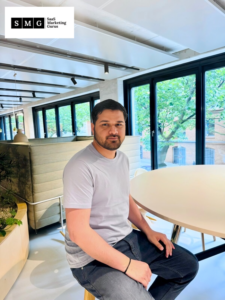
A good product needs more than a launch date. It needs a clear message, the right audience, and a reason for people to pay attention. For Hamza Afzal, understanding that connection has been central to a career built around helping businesses turn visibility into growth.
His journey began in 2013 as a junior SEO specialist. Working from the fundamentals of search marketing gave him a practical understanding of how people discover products and what influences their decisions. Over time, that experience grew into a broader focus on product marketing, launch strategy, and business growth.
Today, as Founder of SaaS Marketing Gurus, Hamza works with companies looking to bring their products to market and reach the people most likely to benefit from them. He has supported more than 200 product owners with launches, particularly on platforms such as Product Hunt, where positioning, timing and preparation can shape how a product is received.
His work also extends to marketplaces such as AppSumo, alongside search visibility, paid campaigns and email marketing. Having managed the online reputation of more than 30 companies, he understands that growth depends on more than attracting attention. Brands also need a clear identity and a level of trust that encourages people to stay engaged.
Hamza’s approach is grounded in practical execution. Rather than treating every business challenge with the same formula, he works to understand what a company wants to achieve and how its marketing can support that goal. The focus is on making strategies useful, measurable and suited to the product and its audience.
While pursuing further studies in Germany, he continues to broaden his perspective on international markets and the changing needs of businesses. This ongoing learning complements his hands-on experience with founders navigating competitive digital markets.
For Hamza, effective marketing is not about being the loudest brand in the room. It is about understanding what a product brings to the table and communicating that value to the right people. From his early work in SEO to helping SaaS companies plan product launches, his journey reflects a simple principle: attention matters most when it gives a business room to grow.
Jessica Moini Elom: When Success Leaves Room for Life

For years, Jessica Moini Elom worked in a world where results, targets and commercial growth shaped the pace of everyday life. During nearly a decade in digital marketing, she progressed to the role of Commercial Director at a global ad tech company. Yet behind the achievements, she began noticing a pattern: professional success did not always leave people feeling fulfilled.
Many high-performing professionals were meeting expectations while struggling to manage stress, protect their personal time and maintain a sense of balance. What she observed led her to question a familiar idea: does success have to come at such a personal cost?
That question eventually changed the direction of her career. In 2023, Jessica launched The Kindness Catalog, creating a space for founders, leaders and professionals who wanted to approach ambition differently. The same year, she was recognised among the “30 Under 30 Faces to Watch.”
Through coaching, workshops and digital programmes, Jessica helps people examine the habits and beliefs that influence how they work and live. Trained at the Tony Robbins and Chloe Madanes coaching school and certified in NLP, she combines structured coaching methods with a focus on emotional awareness and practical change.
Her work centres on challenges that often go unnoticed behind professional achievement. Difficulty setting boundaries, persistent self-doubt and the pressure to remain productive can affect both decision-making and relationships. Jessica encourages clients to recognise these patterns and make changes that fit their everyday lives, whether that means rebuilding confidence, protecting time for rest or reconsidering what deserves their attention.
Her perspective on leadership is closely linked to this work. She believes that understanding personal values, emotions and behaviour can help people lead with greater clarity. For her, looking after well-being does not mean giving up ambition. It means creating a healthier foundation from which to pursue it.
The transition from corporate leadership to coaching has given Jessica a different way to think about professional achievement. Rather than measuring progress only through external results, she encourages people to consider whether the lives they are building also reflect what matters to them.
Through The Kindness Catalog, she continues to challenge the assumption that being successful means being constantly busy. Her message is straightforward: people should not have to choose between meaningful work and a life that feels good to live.
For Jessica Moini Elom, redefining success is not about doing less for the sake of it. It is about making room for ambition, personal well-being and the relationships that give achievement its meaning.
Cristina Passione Calò: Building a Fairer Future for the Creator Economy

Cristina Passione Calò understood the problems of influencer marketing before she set out to change them. As a creator who had generated more than one million interactions across platforms, she experienced the frustrations that can accompany brand partnerships, from delayed payments to unclear expectations. Those experiences gave her a close view of an industry that depended on creators but did not always serve their interests well.
Rather than accept these problems as part of the process, Cristina decided to build an alternative. The result was Starflare.AI, where she serves as CEO and Co-Founder, developing a platform designed to bring greater transparency and accountability to relationships between brands and creators.
Her motivation came from a practical place. She knew what creators needed because she had faced the same challenges herself. That understanding helped shape Starflare’s early direction, with an emphasis on building a platform around real working relationships rather than treating creators as numbers in a campaign.
The first year involved experimentation, setbacks and learning directly from the creator community. Cristina focused on understanding everyday frustrations and refining the platform around those needs. Even before active outreach to brands began, Starflare attracted more than 4,000 creators, with community recommendations and word of mouth contributing to its early growth.
For Cristina, that response reinforced the value of listening before scaling. Building a product for an established market requires more than identifying a gap. It requires understanding why the gap exists and developing something people find useful enough to trust and recommend.
The same thinking shapes her approach to leadership. She encourages open conversations, welcomes feedback and works closely with her team to develop solutions. Collaboration, inclusion and shared responsibility are central to the culture she wants to build, reflecting the same principles she seeks to bring to the platform itself.
As Starflare prepares to raise a $3 million seed round, Cristina is focused on expanding the company’s ability to address persistent challenges in influencer marketing. Her ambition is to help create an environment where expectations are clearer, partnerships are more transparent and creators are treated as genuine business partners.
Her journey reflects how professional experience can become the starting point for meaningful innovation. By turning the frustrations she encountered as a creator into a business problem worth solving, Cristina is working to build a creator economy that places greater value on the people behind the content.
Dr. Yehoshua Rodríguez: Preserving Human Knowledge for the Future
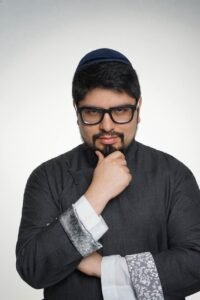
What if a person’s knowledge could continue to guide others long after their role had ended? For Dr. Yehoshua Rodríguez, this question sits at the heart of a new approach to artificial intelligence, one that seeks to preserve not just information, but the experience and expertise behind it.
As Founder and CEO of AI People, Dr. Rodríguez is developing AI Preservation Services designed to help organisations retain valuable knowledge and make it accessible beyond traditional training and documentation. His concept of simultaneous knowledge networks aims to create interactive systems through which human expertise can be preserved, accessed and developed over time.
The idea addresses a challenge faced by organisations across industries. When experienced employees leave, teams change or long-serving leaders retire, valuable institutional knowledge can disappear with them. AI People seeks to bridge that gap by using technology to preserve this knowledge and make it available to future generations of professionals.
Dr. Rodríguez brings a background in electronic engineering and hardware design to this work. His experience leading Tesca Elements, a platform focused on high-impact companies and strategic innovation, has also informed his interest in building technology around practical business needs.
His wider vision extends to Openbursa.com, a value-sharing ecosystem designed to help high-impact entrepreneurs make their contributions accessible through technology. The concept reflects his belief that human potential deserves greater recognition in how society identifies and creates long-term value. As he puts it, “The rarest and most valuable asset on Earth is a developed human being.”
This emphasis on people also shapes the Knowledgeverse, developed through cosmos.aipeople.io. The initiative aims to create a digital environment where preserved knowledge can be explored, shared and expanded, moving beyond static records towards a more interactive experience.
Across these ventures, Dr. Rodríguez is exploring how technology can help people and organisations retain what they have learned and make that experience useful to others. His work brings together artificial intelligence, knowledge preservation and new approaches to recognising human contribution.
For him, legacy need not remain confined to memories, documents or achievements recorded in the past. With the right systems, knowledge can continue to inform decisions, support learning and create value long into the future. That is the possibility behind his vision: a future in which human experience is not simply remembered, but remains available to be learned from.
Eng. Fathi Abdullah: Keeping Saudi Arabia’s Food Supply Moving

Behind every chilled shipment of food reaching a supermarket, restaurant or distribution centre is a logistics system that must work with precision. In Saudi Arabia’s fast-moving consumer goods (FMCG) sector, maintaining that reliability requires the right infrastructure, careful planning and a deep understanding of industrial operations. Eng. Fathi Abdullah Ba-isa, widely known as Aburaed, has spent nearly four decades working across these interconnected fields.
As Managing Director of United Warehouse Co. (UWC), a subsidiary of Hayel Saeed Anam Group and Omar Kassem Alesayi Group, he oversees logistics operations spanning freight forwarding, customs clearance, transport and e-commerce fulfilment. A major focus is cold chain logistics, where maintaining the right temperatures throughout storage and delivery is essential to protecting perishable goods.
From frozen warehouses to the delivery of chicken, seafood and dairy products, these operations support businesses that depend on consistent product quality and reliable distribution. As Saudi Arabia strengthens its food security efforts and expands domestic production, dependable cold chain infrastructure has an increasingly important role in connecting producers, distributors and consumers.
Fathi’s approach to logistics is shaped by a career that began with mechanical engineering and developed through hands-on experience in manufacturing and industrial operations. A graduate of King Fahd University of Petroleum and Minerals, he has worked with organisations including Al Zamil, Al Muhaidib and Al Rajhi Group, building experience across technical and commercial environments.
At Al Taufiq Plastic Co., he contributed to factory expansion and the adoption of lean manufacturing systems designed to increase output while controlling costs. His earlier work commissioning industrial sites, particularly food processing and packaging facilities, also gave him practical insight into the relationship between production efficiency, quality and operational planning.
That understanding continues to inform his work at UWC. Logistics is not simply about moving goods from one location to another. It involves coordinating people, processes, equipment and customer expectations, often within tight timeframes and demanding operating conditions. In cold chain operations, even small failures can affect product quality, customer confidence and compliance.
Under his leadership, UWC has focused on strengthening its logistics processes, adopting more effective tools and investing in the people responsible for daily operations. For Fathi, reliable service depends on teams that understand their responsibilities and can respond effectively when challenges arise.
As Saudi Arabia advances its industrial development and economic diversification under Vision 2030, logistics will remain essential to the growth of manufacturing, food production and trade. Fathi Abdullah’s career reflects the practical work behind that progress: building systems that help businesses operate efficiently and ensuring that products reach their destinations in the condition customers expect
Conclusion
The Top 10 Global Leaders featured here show that there is no single route to success. Each has followed a different path, shaped by personal experience, professional challenges, and a clear commitment to their work.
Their journeys remind us that meaningful leadership is built over time. The impact often lies not only in what leaders achieve, but also in the people they support, the ideas they put into practice, and the progress they help create.
Read more:
10 Most Influential Entrepreneurs to Watch in 2026
The Power List: 10 Leaders Shaping Tomorrow’s World