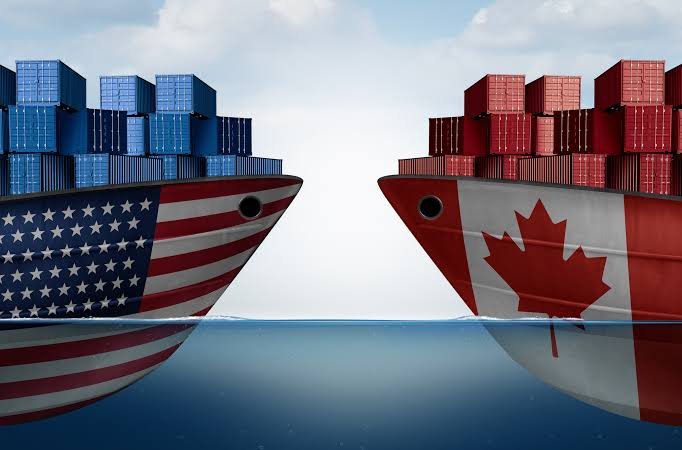
The current trade spat between the US and Canada doesn’t seem to be getting any better. Since President Donald Trump took office again just than 18 months ago and started a comprehensive global tariff campaign, tensions between the two neighbours have been simmering. One of the first nations the Trump administration imposed taxes on was Canada, which is also one of just two nations to retaliate with similar actions.
The US is currently imposing tariffs on Canada’s major industries, including steel, aluminium, lumber, and autos. Last week, an extra 50% duty was placed on around C$28 billion ($20 billion; £15 billion) worth of Canadian commodities. Canada responded on Tuesday by introducing its own counter-duties on American imports, which it describes as a “dollar-for-dollar” and “strategic” retaliation meant to equal the US tariffs.
How has this ongoing trade war impacted the US and Canada, and what might happen next, with no end in sight? Certain Canadian provinces are especially vulnerable to US sectoral tariffs on steel, steel derivatives, aluminium, and automobiles and vehicle parts that violate the USMCA, the current North American trade agreement.
Ontario, the most populous province with a sizable manufacturing sector, has been most severely impacted by the steel and auto tariffs. Tens of thousands of industrial jobs are thought to have been lost in Ontario since early 2025, and several car parts and assembly companies have declared layoffs and output reductions.
Also Read:
A Socialist Senator and a Pro-Trump Opponent Square Battle in Colombia’s Presidential Runoff
Key Trends Developing in Global Equity Markets