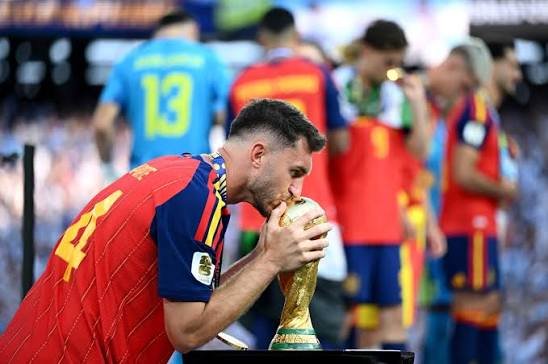
Ferran Torres’ goal in the 106th minute handed Spain their second world title, sixteen years after South Africa, and promptly raised the age-old topic of whether winning genuinely increases a nation’s wealth. FIFA has increased its payment to the winning federation from $42 million (€36.7 million) to a record $50 million (€43.7 million). Out of the $655 million (€572 million) prize money distributed across the expanded 48-team competition, Argentina won in 2022.
The amount allotted to the team, the coaching staff, and the larger support crew is determined by the Spanish federation; the remaining monies are used to support the RFEF’s own operating expenses and development initiatives, and each payment is subject to taxation.
The 17 team members who live in Spain are expected to pay the Spanish government almost €6 million, of which €4.4 million would go to the state tax office and smaller amounts to the Basque and Navarre governments.
Although the study’s sample of champions is unavoidably small, a 2024 study by economist Marco Mello of the University of Aberdeen, published in the Oxford Bulletin of Economics and Statistics, claims that winning the World Cup boosts a champion’s year-over-year GDP growth by at least 0.48% over the two quarters following the final, before the effect fades.
Exports, which climb five to six percentage points faster as the championship serves as a worldwide advertising campaign for the nation’s goods and services, appear to be the driver rather than celebration expenditure.
Also Read:
What Influential Believe will Happen as a Result of the Iran War
Prominent Senator Cautions the Commission not to Abandon the AI Liability Mechanism